Beyond the Celebrations: The Treaty of Waitangi’s Enduring Legacy, Key Controversies, and its Future in Aotearoa New Zealand
Explore the Treaty of Waitangi (Te Tiriti o Waitangi), New Zealand’s founding document. Uncover its history, the two versions, ongoing controversies, Māori rights challenges, and how Waitangi Day shapes NZ’s bicultural future.
Waitangi Day – More Than Just a National Holiday
Every February 6th, Waitangi Day transforms New Zealand into a nation of reflection, celebration, and often, intense debate. This new zealand waitangi day marks far more than just another public holiday – it commemorates the signing of Te Tiriti o Waitangi, the pivotal founding document that shaped the destiny of Aotearoa New Zealand.
In today’s climate, waitangi day new zealand has become a flashpoint for discussions about governmental proposals to unwind Māori policies and review the Treaty’s principles. Street protests, court challenges, and passionate debates fill the air as New Zealanders grapple with their nation’s complex colonial legacy and its modern implications.
This comprehensive exploration delves into the profound history and dual interpretations of the Treaty, examines its complex legacy through contemporary challenges and controversies, offers crucial community perspectives, and guides how to meaningfully engage with this significant day. Our journey seeks deeper understanding of the Treaty’s enduring impact on Aotearoa New Zealand’s bicultural identity.
What is Te Tiriti o Waitangi? New Zealand’s Founding Covenant
A Binding Agreement Between Two Peoples
The Treaty of Waitangi stands as a covenant between representatives of the British Crown and Māori chiefs, signed on February 6, 1840. Governor William Hobson and many northern Māori chiefs first signed this historic document, which was later endorsed by over 500 leaders from across new zealand waitangi, including 13 women who added their names to this foundational agreement.
The Two Versions: A Recipe for 185 Years of Debate
The Treaty’s complexity stems from fundamental differences between its English and Māori versions, creating interpretive challenges that persist today.
The English Version stated that Māori ceded “absolutely and without reservation all the rights and powers of sovereignty” to the British Crown, while being guaranteed “undisturbed possession” of their lands, forests, fisheries, and other properties.
The Māori Version (Te Tiriti) told a different story. Māori ceded “kawanatanga katoa” (complete governance) to the Crown and were guaranteed “tino rangatiratanga” (the unqualified exercise of chieftainship or full authority) over their lands, dwelling places, and all other possessions or “taonga” (treasures).
These crucial differences between “sovereignty” and “kawanatanga,” and “undisturbed possession” versus “tino rangatiratanga” over “taonga,” have fueled 185 years of debate and misinterpretation. Many Māori believed they gave up governance over lands while retaining the right to manage their own affairs and protect their cultural treasures.
The Fourth Article: Guaranteeing Religious Freedom
Added to the Māori text at Bishop Jean Baptiste Pompallier’s request, the fourth article guaranteed protection for all faiths and Māori custom in the emerging nation, demonstrating early recognition of cultural diversity.
Key Māori Concepts Embodied in Te Tiriti
Understanding these foundational terms is crucial for comprehending the Māori perspective:
- Tino Rangatiratanga: Self-determination and unqualified authority for Māori
- Kawanatanga: Governance, especially for settlers (tauiwi)
- Taonga: Treasures, encompassing both tangible and intangible cultural elements
- Mana: Prestige, authority, respect, dignity
- Manaaki: Hospitality, care, respect
- Aroha: Love, compassion, empathy
- Tūrangawaewae: A place to stand, a right to belong – for both Māori and tauiwi
A History of Promises Broken and Progress Fought For
Colonial Breaches and Their Devastating Impact
The Crown quickly broke its Treaty promises, leading to devastating consequences for Māori communities. Wars of conquest, erosion of tribal structures, language suppression, massive land loss, and illegal confiscations characterized the colonial period. These actions stripped Māori of their resources, cultural practices, and political authority.
The Māori Renaissance: Fighting for Recognition
The 1970s-1980s witnessed a powerful Māori Renaissance. A generation of disenchanted young Māori, known as Ngā Tamatoa, picketed waitangi day events, demanding the Treaty be honored. This activism led to policies enshrining te reo Māori and the establishment of the Waitangi Tribunal.
The Waitangi Tribunal: Seeking Justice
Established in 1975, the Waitangi Tribunal investigates and resolves claims by Māori against the Crown for historical grievances. This institution seeks clarity, accountability, and restitution for Treaty breaches, providing a formal mechanism for addressing past wrongs.
Treaty Principles: Partnership, Participation, Protection
In the late 1980s, the Court of Appeal upheld three core Treaty principles that became a “helpful force” in settlement processes. These principles outline a relationship of good faith, opportunities for Māori involvement in decision-making, and protection of Māori rights, interests, assets, and sovereignty.
Treaty Settlements and Bicultural Commitment
The settlement process has involved apologies, financial redress, return of Crown-held land, and co-governance arrangements to address historic wrongs. Both National and Labour governments have supported these efforts, with institutions like the New Zealand Catholic Bishops Conference affirming New Zealand as a bicultural state, acknowledging Māori as indigenous people with rights to land and political organization to preserve cultural identity.
Waitangi Day: Celebrations, Protests, and Enduring Tensions
Commemoration and National Identity
New zealand waitangi day, observed annually on February 6th, commemorates the first signing of Te Tiriti o Waitangi and serves as New Zealand’s national day. This date represents a key marker in the nation’s history, though its significance remains contested.
Evolution of Official Recognition
The first official celebration occurred in 1934, after Lord and Lady Bledisloe gifted the Waitangi Estate to New Zealand’s people. Waitangi day new zealand became a national public holiday in 1974, though it was briefly renamed “New Zealand Day” in 1973 before reverting to Waitangi Day in 1976.
A Day of Striking Contrasts
Waitangi day presents striking dualities, hosting special ceremonies like dawn services and carnival-like events alongside confrontations over sovereignty, inequality, and historical grievances. It remains one of the few places where politicians are held accountable to Māori on their own terms.
Platform for Protest and Political Expression
The day frequently serves as a platform for protests and demonstrations, with Māori groups expressing dissatisfaction over unfulfilled Treaty obligations and ongoing inequalities. These protests highlight the gap between Treaty promises and contemporary reality.
Contemporary Challenges: Unraveling Progress and The Treaty Principles Bill
Government Proposals to Reverse Māori Policies
New Zealand’s current center-right coalition government, led by Prime Minister Christopher Luxon, proposes repealing or reviewing at least a dozen Māori-related policies. These include abolishing the Māori Health Authority and rolling back te reo Māori use in government departments. The government claims these moves aim to “clear confusion” around bilingualism and base policy on “need, not race.”
The Problematic “Needs Not Race” Rhetoric
Critics argue this rhetoric mirrors historical colonizing justifications and assimilation policies, ignoring that Māori’s greater needs directly result from past racist government policies that stripped them of resources and language. All social indicators show Māori are the least privileged in health, education, justice, income, housing, and government participation.
The Controversial Treaty Principles Bill
The Act Party’s proposal to redefine Treaty principles has drawn the most anger. It aims to define principles in law, including civil government, protection of hapū and iwi Māori rights, and equality before the law.
Opponents argue it misinterprets the Treaty, threatens decades of progress, and risks undermining unique Indigenous rights. Critics view it as “historical revisioning done in bad faith under the thinly veiled guise of ‘equality for all New Zealanders.'” The bill’s approach is criticized for misinterpreting “rangatiratanga” to mean self-determination for everyone, rather than specifically for Māori as guaranteed by the Treaty.
United Māori Opposition and Legal Challenges
Māori across tribes and movements have galvanized in unprecedented ways, with thousands gathering for marches in major cities and mounting legal challenges against government policies. Powerful, well-funded tribal organizations stand ready to litigate, including Waikato-Tainui’s High Court case and Ngāi Te Rangi’s Waitangi Tribunal claim against te reo rollback.
A Community Perspective: Reclaiming the Treaty’s Vision
Treaty as Balance and Promise
From a community perspective, Te Tiriti represents a promise between two peoples to care for each other, emphasizing balance and remaining as relevant today as in 1840. It’s not about race, but about communities living harmoniously with their differences.
Challenging Misinterpretations
Governments and politicians have used self-serving interpretations to leverage votes and support settler interests. Academic writing often focuses solely on legal perspectives, supporting Crown positions while failing to explain Te Tiriti in terms of tikanga (Māori customs and protocols). Judicial “principles of the Treaty” can minimize rangatiratanga’s meaning, making it subservient to law rather than honoring the original agreement.
Equality with Cultural Difference
True equality means everyone has equal rights, but the expression of those rights can differ based on culture. Examples include the right to te reo Māori for Māori, kaupapa Māori education, and rongoā and hauora healthcare. The Treaty allows for “your culture and the rights of being a citizen” – the “and,” not the “or.”
Fostering Constitutional Conversations
Māori leaders work to foster mature conversations at local and community levels about how rangatiratanga and kawanatanga can work side-by-side, independent of Crown permission. There’s hope that New Zealanders will be fair when properly informed, and desire for government leadership that courageously supports principled discussions about Te Tiriti’s place in communities.
Waitangi Day for Visitors & Educators: Engaging with History and Culture
Experiencing Waitangi Day Meaningfully
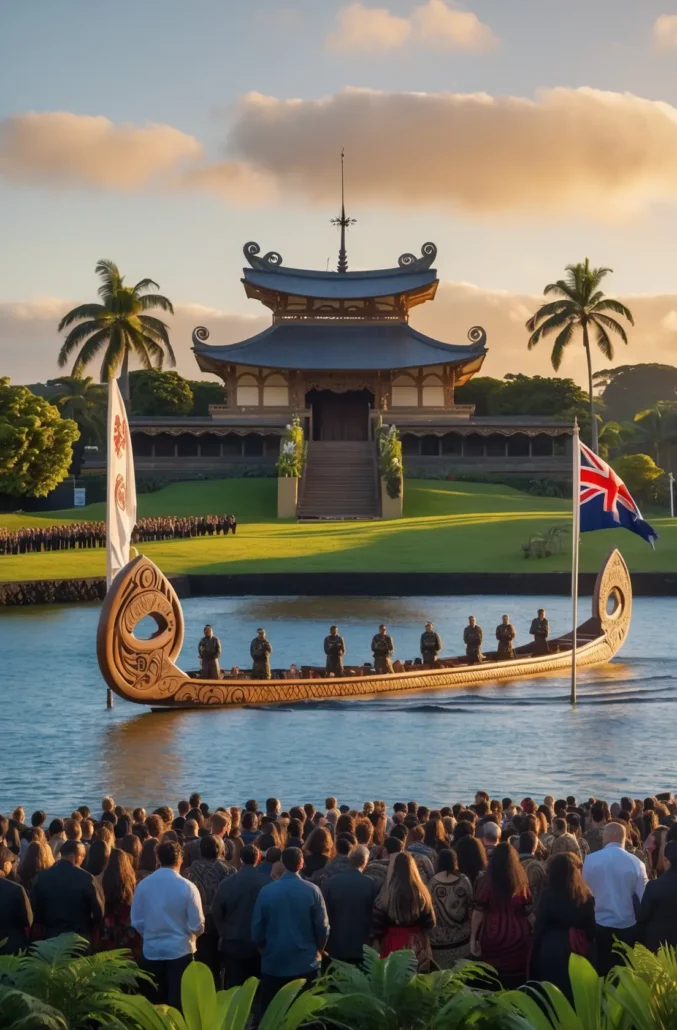
Visit the Waitangi Treaty Grounds: Central to understanding this significant day, the grounds offer immersive experiences in history, culture, and celebration. Must-see attractions include Te Whare Rūnanga (Carved Meeting House), the Museum of Waitangi, and waka taua (war canoe) demonstrations. Arrive early for the moving Dawn Service.
Cultural Performances and Events: Enjoy vibrant kapa haka performances, live music, storytelling, and artisan markets in major cities like Auckland and Wellington, experiencing contemporary Māori culture alongside traditional practices.
Explore Local Marae: Attend pōwhiri (traditional welcoming ceremonies), experience authentic Māori food and storytelling while respecting protocols like modest dress and cultural sensitivity.
Take Historical Tours: Visit museums like Te Papa Tongarewa in Wellington or Auckland War Memorial Museum for extensive exhibits on the Treaty and Māori history, providing context for contemporary discussions.
Educational Activities on Te Tiriti o Waitangi
For Young Learners: Engage through storytelling, arts and crafts activities (creating waka, Union Jack designs, traditional cloaks), and manaaki activities involving traditional Māori foods and sharing.
For Deeper Exploration: Interactive games exploring sovereignty and partnership concepts, role-playing historical figures and negotiations, and creative writing about the Treaty’s ongoing legacy.
For Advanced Learners: Debate different viewpoints and interpretations, participate in outdoor exploration connecting Māori culture to the land through marae visits, and engage in Aroha Circles for open discussion and empathy building.
Shaping New Zealand’s Bicultural Future
Waitangi day serves as a powerful annual reminder of the Treaty of Waitangi, a document of immense historical importance that continues shaping New Zealand’s legal, cultural, and social fabric. It embodies promises of partnership, participation, and protection while highlighting a history of breaches and ongoing struggles for Māori rights.
The current political climate, with attempts to reinterpret or diminish Treaty principles, underscores the critical need for continued dialogue, understanding, and upholding the Treaty’s original intent. New zealand waitangi represents more than historical commemoration – it’s an ongoing commitment to bicultural partnership.
Engaging with Te Tiriti o Waitangi means embracing its complexities, learning from past mistakes, and actively contributing to a future where mutual respect, understanding, and fairness guide relationships between all peoples in Aotearoa New Zealand. As we move forward, the principles of manaaki, mana, and aroha must guide our collective journey toward true partnership and shared prosperity.
The Treaty’s legacy challenges every New Zealander to consider their role in honoring this founding covenant, ensuring that the promises made in 1840 find meaningful expression in contemporary Aotearoa. Through education, dialogue, and commitment to bicultural values, waitangi day new zealand can evolve from a day of division to one of genuine unity and shared purpose.