Cinco de Mayo 2026: History, Facts, & Why We Celebrate
Last Updated: February 2026
Cinco de Mayo Dates for the Next 10 Years
Planning ahead? Here’s when Cinco de Mayo falls through 2035:
| Year | Date | Day of the Week |
|---|---|---|
| 2026 | May 5, 2026 | Tuesday |
| 2027 | May 5, 2027 | Wednesday |
| 2028 | May 5, 2028 | Friday |
| 2029 | May 5, 2029 | Saturday |
| 2030 | May 5, 2030 | Sunday |
| 2031 | May 5, 2031 | Monday |
| 2032 | May 5, 2032 | Wednesday |
| 2033 | May 5, 2033 | Thursday |
| 2034 | May 5, 2034 | Friday |
| 2035 | May 5, 2035 | Saturday |
📅 Download Your May 2026 Calendar
Never miss Cinco de Mayo or other important dates. Get your free printable May 2026 calendar.
What is Cinco de Mayo? Understanding the Holiday
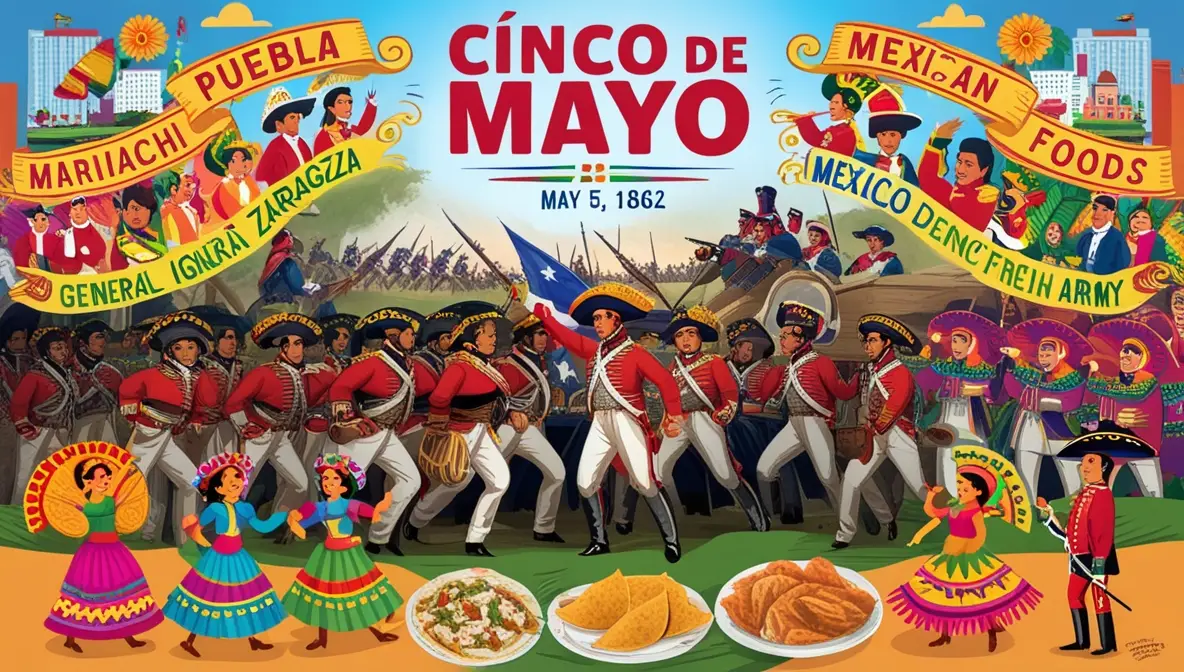
Cinco de Mayo (Spanish for “Fifth of May”) commemorates the Mexican army’s unlikely victory over French forces at the Battle of Puebla on May 5, 1862. Despite being vastly outnumbered and outgunned, Mexican troops under General Ignacio Zaragoza defeated what was then considered the world’s most powerful military force.
While often confused with Mexican Independence Day, Cinco de Mayo is primarily a regional holiday in Mexico, celebrated mainly in the state of Puebla. Interestingly, it has evolved into a major celebration of Mexican-American culture and heritage in the United States, particularly in areas with large Mexican-American populations.
The History of Cinco de Mayo: The Battle of Puebla
The Political Context: Mexico in the 1860s
To understand the significance of Cinco de Mayo, we must examine the turbulent period following Mexico’s independence from Spain in 1821. The young nation faced decades of political instability, internal conflicts, and mounting foreign debt. By 1861, Mexico’s financial crisis had become so severe that President Benito Juárez suspended debt payments to European creditors.
France, under Emperor Napoleon III, saw this as an opportunity to expand French influence in the Americas and establish a monarchy sympathetic to French interests. Napoleon III envisioned creating a French empire in Mexico that could challenge United States influence in the region and provide access to Mexico’s rich natural resources.
The Battle: David vs. Goliath
On May 5, 1862, approximately 6,000 French troops, led by General Charles de Lorencez, advanced on the city of Puebla de Los Angeles. The French army was well-equipped, professionally trained, and hadn’t been defeated in nearly 50 years. Facing them were roughly 4,500 Mexican soldiers—many of them poorly equipped indigenous fighters and local militia—under the command of General Ignacio Zaragoza.
Against all odds, the Mexican forces successfully defended Puebla, inflicting heavy casualties on the French army and forcing them to retreat. The battle lasted from daybreak until evening, with the Mexicans using the terrain to their advantage and demonstrating remarkable courage and tactical skill.
The Aftermath and Legacy
While the victory at Puebla was significant, it didn’t end the French intervention in Mexico. The French eventually regrouped, captured Mexico City, and installed Archduke Maximilian of Austria as Emperor of Mexico in 1864. However, the Battle of Puebla became a powerful symbol of Mexican resistance against foreign domination and demonstrated that determination could overcome even the mightiest military force.
By 1867, with support from the United States following the end of the American Civil War, Mexican forces under President Juárez successfully expelled the French and executed Maximilian, restoring the republic. The brief victory at Puebla had helped sustain Mexican morale during this difficult period.
The Cultural Significance of Cinco de Mayo in Mexico and the United States
Cinco de Mayo in Mexico
In Mexico, Cinco de Mayo is primarily celebrated in the state of Puebla, where the historic battle took place. The day features military parades, battle reenactments, and cultural events honoring the bravery of General Zaragoza and his troops. While it’s a day of regional pride in Puebla, it is not a federal holiday throughout Mexico, and many Mexicans in other states treat it as a regular workday.
Mexican Independence Day, celebrated on September 16 (not Cinco de Mayo), commemorates the start of Mexico’s war of independence from Spain in 1810 with the Grito de Dolores. This is the most important national holiday in Mexico, often confused with Cinco de Mayo by people outside the country.
Cinco de Mayo in the United States
In the United States, Cinco de Mayo has evolved into something quite different from its origins. The holiday gained prominence during the 1960s as part of the Chicano Movement, which sought to promote Mexican-American identity, civil rights, and cultural pride. Activists recognized Cinco de Mayo as an opportunity to celebrate Mexican heritage and educate others about Mexican history and contributions to American society.
Today, Cinco de Mayo is widely celebrated across the United States, particularly in cities with significant Mexican-American populations such as Los Angeles, Chicago, Houston, San Antonio, and Phoenix. The celebrations have expanded beyond the Mexican-American community to become a broader cultural phenomenon embraced by diverse populations.
Modern Cinco de Mayo Celebrations Across the United States
Contemporary Cinco de Mayo celebrations in the United States feature a vibrant mix of cultural traditions, educational activities, and festive entertainment:
Parades and Festivals
Major cities host elaborate parades featuring colorful floats, traditional dancers in folkloric costumes, mariachi bands, and community organizations. These events often draw thousands of spectators and showcase the rich diversity of Mexican culture. Festivals offer activities ranging from traditional Mexican crafts and art exhibitions to historical displays about the Battle of Puebla and Mexican-American heritage.
Traditional Mexican Gastronomy
Cinco de Mayo is a showcase for authentic Mexican cuisine. Restaurants and food vendors offer traditional dishes such as tacos al pastor, tamales, mole poblano, enchiladas, pozole, and fresh guacamole. Many celebrations feature cooking demonstrations, salsa-making contests, and opportunities to learn about regional Mexican culinary traditions. Food plays a central role in bringing communities together and sharing cultural heritage.
Music and Dance Performances
Mariachi bands and traditional dancers are central to Cinco de Mayo festivities. The sounds of trumpets, violins, and guitars fill the air as mariachi groups perform classic Mexican songs. Folkloric dance troupes perform traditional dances like the Jarabe Tapatío (Mexican Hat Dance), Danza de los Viejitos, and regional dances from different Mexican states. These performances, featuring dancers in vibrant traditional costumes, create an atmosphere of cultural celebration and pride.
Educational Programs and Cultural Activities
Many communities use Cinco de Mayo as an opportunity to educate people about Mexican history, the significance of the Battle of Puebla, and Mexican-American contributions to society. Schools organize special lessons and activities, museums host exhibitions on Mexican art and history, and cultural centers offer workshops on traditional crafts, language, and customs.
The Commercialization and Criticism of Cinco de Mayo
As Cinco de Mayo has grown in popularity in the United States, it has also faced increasing commercialization and legitimate criticism. Many businesses have adopted the holiday primarily as a marketing opportunity, leading to widespread commercialization that often overshadows its historical and cultural significance.
Critics point out that Cinco de Mayo celebrations frequently emphasize partying and alcohol consumption over the historical context and cultural meaning of the day. This has led to concerns about cultural appropriation and the reduction of Mexican culture to stereotypes. Some celebrations feature offensive costumes, decorations, or behaviors that disrespect Mexican heritage rather than honor it.
There is a growing movement within Mexican-American communities to reclaim Cinco de Mayo by emphasizing its historical roots and promoting celebrations that authentically honor Mexican heritage. This includes efforts to:
- Educate the public about the true meaning and history of Cinco de Mayo
- Promote respectful celebrations that honor Mexican culture authentically
- Support Mexican-American businesses and cultural organizations
- Encourage participation in educational and cultural activities rather than just commercial events
- Combat stereotypes and cultural appropriation
Frequently Asked Questions About Cinco de Mayo
Is Cinco de Mayo Mexico’s Independence Day?
No. This is one of the most common misconceptions about Cinco de Mayo. Mexico’s Independence Day is celebrated on September 16, commemorating the start of the Mexican War of Independence from Spain in 1810 with the Grito de Dolores. Cinco de Mayo commemorates the Battle of Puebla in 1862, which occurred more than 50 years after Mexico gained independence.
What are traditional Cinco de Mayo foods?
Traditional foods for Cinco de Mayo celebrations include mole poblano (a complex sauce from Puebla), chiles en nogada, tamales, tacos, pozole, enchiladas, fresh guacamole, and Mexican rice and beans. Many celebrations also feature regional specialties from Puebla, the state where the historic battle took place. Beverages include agua fresca, horchata, and traditional Mexican beverages.
Why is Cinco de Mayo celebrated more in the US than in Mexico?
In Mexico, Cinco de Mayo is primarily a regional holiday celebrated in the state of Puebla where the battle occurred. It’s not a federal holiday and many Mexicans in other states treat it as a regular day. In the United States, Cinco de Mayo gained prominence during the 1960s Chicano Movement as a celebration of Mexican-American culture and heritage. It has since evolved into a broader cultural celebration embraced by diverse communities across the country, making it more widely observed in the US than in most of Mexico.
Who was General Ignacio Zaragoza?
General Ignacio Zaragoza (1829-1862) was the Mexican general who led the outnumbered Mexican forces to victory at the Battle of Puebla on May 5, 1862. Born in what is now Goliad, Texas (then part of Mexico), Zaragoza became a national hero for his brilliant military strategy and leadership. Tragically, he died of typhoid fever just four months after the battle, at the age of 33. Today, he is remembered as one of Mexico’s greatest military heroes.
What happened after the Battle of Puebla?
While the Mexican victory at Puebla was significant, it did not end the French intervention. France sent additional troops, eventually captured Mexico City in 1863, and installed Archduke Maximilian of Austria as Emperor of Mexico in 1864. However, Mexican resistance continued, and with support from the United States after the American Civil War ended, President Benito Juárez’s forces successfully expelled the French by 1867 and executed Maximilian, restoring the Mexican republic.
How can I celebrate Cinco de Mayo respectfully?
To celebrate Cinco de Mayo respectfully: Learn about the true history of the Battle of Puebla and its significance; support Mexican-American owned businesses and restaurants; attend educational and cultural events that honor Mexican heritage authentically; avoid stereotypical costumes or decorations that appropriate or mock Mexican culture; participate in community celebrations that emphasize cultural appreciation rather than just partying; and share accurate information about the holiday’s meaning with others.
How Cinco de Mayo Relates to American History
An often overlooked aspect of Cinco de Mayo is its connection to American history. The French intervention in Mexico occurred during the American Civil War (1861-1865), when the United States was unable to enforce the Monroe Doctrine, which opposed European colonization in the Americas.
Had the French succeeded in establishing a permanent empire in Mexico, it could have significantly altered the balance of power in North America. Some historians suggest that a French-controlled Mexico might have provided support to the Confederacy during the Civil War. The Mexican resistance, symbolized by the victory at Puebla, helped prevent this scenario and maintained Mexican sovereignty during a critical period in both Mexican and American history.
After the Civil War ended, the United States provided diplomatic and material support to President Juárez’s republican government, helping Mexico expel the French forces and restore democracy. This collaboration strengthened the relationship between the two nations.
Conclusion: The Enduring Legacy of Cinco de Mayo
Cinco de Mayo represents far more than a single military victory. It embodies the spirit of resistance against overwhelming odds, cultural pride, and the ongoing struggle for sovereignty and self-determination. The Battle of Puebla demonstrated that courage, strategy, and determination could overcome even the most powerful military force.
While the holiday’s significance has evolved differently in Mexico and the United States, it remains a vital part of Mexican and Mexican-American heritage. In Mexico, it serves as a reminder of national resilience during a difficult period in the country’s history. In the United States, it has become an important celebration of Mexican-American culture and contributions to American society.
As we celebrate Cinco de Mayo in 2026, we have an opportunity to honor its rich cultural legacy by understanding and sharing its true historical significance. By moving beyond stereotypes and commercialization toward authentic cultural appreciation and education, we can ensure that Cinco de Mayo continues to be celebrated in a way that respects and honors the courage of those who fought at Puebla and the vibrant Mexican heritage that enriches our communities today.