
World Elephant Day 2026 — August 12 | History, Facts & How to Help
Every year on August 12, millions of people around the world observe World Elephant Day — a global awareness event dedicated to the protection and preservation of both African and Asian elephants. First celebrated on August 12, 2012, this annual campaign has grown into one of the most recognized wildlife conservation observances on the planet, uniting scientists, rangers, educators, and citizens across more than 100 countries.
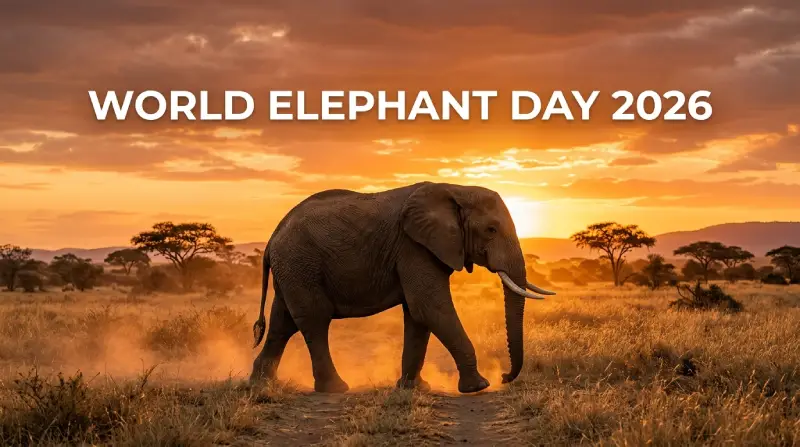
Whether you want to understand the history of World Elephant Day, learn fascinating facts about elephants, or discover how to take meaningful action, this complete guide covers everything you need to know.
World Elephant Day 2026: Dates for the Next Five Years
World Elephant Day falls on August 12 every year, without exception. Below are the upcoming dates at a glance:
| Year | Date | Day of the Week | Notable Context |
|---|---|---|---|
| 2026 | 12 August 2026 | Wednesday | 14th anniversary of World Elephant Day |
| 2027 | 12 August 2027 | Thursday | 15th anniversary milestone |
| 2028 | 12 August 2028 | Saturday | First weekend observance in the cycle |
| 2029 | 12 August 2029 | Sunday | Global awareness campaigns expected |
| 2030 | 12 August 2030 | Tuesday | 18th anniversary — UN biodiversity decade |
Mark your annual calendar 2026 now and set a reminder for August 12.
What Is World Elephant Day?
World Elephant Day is an international awareness campaign that raises public attention to the urgent threats elephants face — including poaching, habitat loss, human-wildlife conflict, and the illegal ivory trade. The day encourages governments, conservation organizations, and individuals to take concrete action to protect elephants for future generations.
The campaign is observed in virtually every country and reaches tens of millions of people through media campaigns, conservation events, and social media activism under the hashtag #WorldElephantDay.
History and Origin of World Elephant Day
World Elephant Day was co-founded on August 12, 2012, by Canadian filmmaker Patricia Sims and Thailand’s Elephant Reintroduction Foundation, an initiative under the royal patronage of Her Majesty Queen Sirikit of Thailand. The inaugural launch took place in Bangkok, spotlighting the critical situation facing both African and Asian elephant populations.
Since its founding, Patricia Sims has continued to lead the initiative as president of the World Elephant Society. The campaign has forged partnerships with over 100 elephant conservation organizations worldwide, engaging millions of supporters every August. The choice of August 12 reflects a period when many elephant populations face heightened vulnerability due to seasonal pressures and intensified human activity.
Why Elephants Matter: Their Role in Ecosystems
Elephants are a keystone species — their behavior directly shapes and sustains entire ecosystems. As the world’s largest land mammals, they perform ecological functions that no other species can replicate:
Seed dispersal. Elephants spread seeds across vast distances through their dung, helping forests regenerate and maintaining biodiversity across vast landscapes.
Water creation. They dig waterholes that dozens of other species depend on during dry seasons.
Vegetation management. Elephants clear pathways and thin dense bush, creating habitats for smaller animals and preventing dangerous overgrowth.
Carbon sequestration. Forest elephants actively promote the growth of large trees that store significant quantities of carbon, making them key allies in the fight against climate change.
Cultural significance. In many Asian cultures — particularly in India and Thailand — elephants are sacred symbols of wisdom, power, and prosperity, deeply woven into religion, history, and daily life.
African vs. Asian Elephants: Species Overview
There are three recognized elephant species, each with a distinct conservation status according to the IUCN Red List:
| Feature | African Savanna Elephant | African Forest Elephant | Asian Elephant |
|---|---|---|---|
| Scientific Name | Loxodonta africana | Loxodonta cyclotis | Elephas maximus |
| IUCN Status | Endangered | Critically Endangered | Endangered |
| Estimated Population | ~350,000 | ~100,000 | ~40,000–50,000 |
| Primary Habitat | Sub-Saharan savannas | Central/West African forests | South & Southeast Asia |
| Tusk Presence | Both sexes | Both sexes | Mainly males |
All three species are threatened. The African forest elephant is classified as Critically Endangered — the highest threat category before extinction — making its conservation especially urgent.
Threats Facing Elephants Today
Despite growing global awareness, elephants face severe existential threats that World Elephant Day works to address:
Poaching and the ivory trade remain the single largest driver of decline. Tens of thousands of elephants are killed annually for their tusks, primarily to feed demand from Asian markets.
Habitat loss and fragmentation. Agricultural expansion and deforestation destroy elephant corridors and feeding grounds, forcing populations into smaller, isolated patches of land.
Human-elephant conflict. As human settlements expand into elephant territory, deadly confrontations increase — for both people and animals.
Climate change. Shifting rainfall patterns reduce water and food availability, pushing elephant herds further into human-occupied areas.
Captivity and exploitation. Thousands of Asian elephants are kept in substandard conditions for tourism and entertainment purposes, often subjected to cruel training methods.
Genetic isolation. Fragmented populations reduce genetic diversity, weakening species resilience over time.
The numbers tell a stark story: African elephant populations declined sharply from a peak of 472,269 individuals in 2007 to fewer than 160,000 in 2025, largely driven by poaching and habitat destruction.
10 Fascinating Facts About Elephants
Elephants are among the most intelligent and emotionally complex animals on Earth. Here are ten facts that reveal just how extraordinary they are:
- An elephant’s brain weighs on average 4.8 kg — the largest brain of any living land animal, more than three times the size of a human brain.
- Elephants communicate using low-frequency rumbles that can travel several miles underground, inaudible to humans.
- Recent research suggests elephants may use individual names for one another — a level of social cognition extremely rare in the animal kingdom.
- Elephants can recognize their own reflection in a mirror, a cognitive ability shared only with great apes, dolphins, and humans.
- An adult elephant can drink up to 200 liters of water per day and consumes up to 150 kg of vegetation daily.
- Elephants display grief, visiting the bones of deceased herd members in what researchers describe as mourning rituals.
- They exhibit empathy, caring for injured or weak herd members and supporting them during travel.
- Elephants have a 22-month gestation period — the longest of any land mammal.
- Botswana hosts the world’s largest elephant population, with approximately 131,909 individuals.
- Tusks are actually elongated incisor teeth, used as tools, weapons, and for digging up roots and water.
How to Celebrate World Elephant Day on August 12
Whether you are an educator, student, activist, or animal lover, there are meaningful ways to participate in World Elephant Day:
Spread awareness on social media. Share facts, infographics, and posts using #WorldElephantDay to reach new audiences and inspire action.
Donate to a reputable organization. Support recognized conservation bodies such as WWF, Save the Elephants, or the David Sheldrick Wildlife Trust.
Educate in the classroom. Teachers can organize virtual zoo tours, conservation discussions, and elephant-themed art projects to engage younger generations.
Watch a documentary. Films such as The Ivory Game or Born to Be Wild illuminate the conservation challenges elephants face and inspire meaningful change.
Shop ethically. Refuse to buy ivory or products derived from elephant materials. If in doubt, do not purchase.
Support habitat protection. Contribute to organizations working to preserve elephant corridors, national parks, and forest habitats.
Advocate for stronger policy. Write to your elected representatives urging stronger laws against ivory trafficking and greater investment in anti-poaching enforcement.
Key Conservation Organizations Working to Protect Elephants
Several organizations work year-round on elephant conservation and actively organize World Elephant Day events:
World Elephant Society (worldelephantday.org) is the founding organization, led by Patricia Sims, coordinating global awareness campaigns every August 12.
WWF campaigns against poaching and supports African and Asian elephant habitats through field programs and policy advocacy.
Save the Elephants conducts Kenya-based research and conservation fieldwork, including elephant tracking and community engagement.
Elephants for Africa focuses on research-based conservation in Botswana, home to the world’s largest elephant population.
U.S. Fish & Wildlife Service funds the Asian Elephant Conservation Fund across 13 Asian range states, supporting habitat protection and anti-poaching efforts.
Zoo Tampa hosts annual on-site World Elephant Day conservation education events, connecting local communities with global conservation goals.
Frequently Asked Questions about World Elephant Day
When is World Elephant Day?
World Elephant Day is observed every year on August 12. It has been celebrated on this date annually since its founding on August 12, 2012.
Who founded World Elephant Day?
World Elephant Day was co-founded by Canadian filmmaker Patricia Sims and Thailand’s Elephant Reintroduction Foundation, under the patronage of HM Queen Sirikit of Thailand, in 2012.
Why is World Elephant Day celebrated?
World Elephant Day raises critical awareness about threats to African and Asian elephants, including poaching, ivory trafficking, habitat loss, and human-wildlife conflict. It mobilizes millions of people and organizations to support elephant conservation globally.
How many elephants are left in the world?
As of 2025–2026 estimates, there are approximately 400,000–415,000 African elephants across sub-Saharan Africa and around 40,000–50,000 Asian elephants across South and Southeast Asia. African forest elephants are classified as Critically Endangered.
Are elephants endangered?
Yes. African savanna elephants are classified as Endangered, African forest elephants as Critically Endangered, and Asian elephants as Endangered by the IUCN Red List of Threatened Species.
What is the gestation period of an elephant?
Elephants have the longest gestation period of any land mammal — approximately 22 months, or nearly two full years.
Which country has the most elephants?
Botswana hosts the world’s largest elephant population, with an estimated 131,909 individuals, making it the global stronghold for African savanna elephants.
What is the hashtag for World Elephant Day?
The official hashtag is #WorldElephantDay, used globally across social media platforms every August 12 to spread awareness and mobilize action.
How can I help elephants on World Elephant Day?
You can donate to elephant conservation organizations, share awareness content with #WorldElephantDay, refuse to purchase ivory products, support habitat protection initiatives, and advocate for stronger anti-poaching legislation with your local representatives.
World Elephant Day, observed every year on August 12, is more than a symbolic date on the calendar — it is a global call to action for one of the planet’s most intelligent, ecologically vital, and endangered species. With African forest elephants classified as Critically Endangered and Asian elephant populations dwindling to as few as 40,000 individuals, the urgency of conservation efforts has never been greater.
Whether you choose to donate, educate, advocate, or simply spread awareness with #WorldElephantDay, every action contributes to a future where elephants continue to roam freely. Explore our events calendar 2026 to discover other important international awareness days, and download your free August 2026 printable calendar to mark World Elephant Day on your wall.