
May Day Dates:
| Date | Name | Day | Week | Days left |
|---|---|---|---|---|
| May 3, 2027 | May Day 2027 | Monday | 18 | 218 |
| May 1, 2028 | May Day 2028 | Monday | 18 | 582 |
| May 7, 2029 | May Day 2029 | Monday | 19 | 953 |
| May 6, 2030 | May Day 2030 | Monday | 19 | 1317 |
May Day, known in Irish as Lá Bealtaine or Labour Day (Lá an Lucht Oibre), is commemorated on the first Monday of May, marking a public holiday in the Republic of Ireland. This day holds dual significance as both an ancient Celtic festival and a modern observance for the advocacy of workers’ rights.
Is May Day a Public Holiday?
Indeed, May Day is recognized as a public holiday. It grants a respite for the general populace, with schools and the majority of businesses ceasing operations for the day.
Maypole Dancer
The tradition of maypole dancing, though waning, is still loosely associated with May Day celebrations in Ireland.
What Do People Do?
In certain villages, the day is marked with fairs or communal feasts. In major urban centers like Dublin, Labour Day parades, demonstrations, and festivities are common. These events often draw participation from trade unions, political parties, and social justice groups from both the Republic of Ireland and Northern Ireland. These celebrations may occur on the first Monday of May or the closest Saturday to the date.
Public Life
On May Day, banks, post offices, and many businesses shut their doors. However, stores and pubs typically remain open, though with altered hours. Public transportation schedules vary depending on location, and parades may cause some local traffic disruptions.
Background
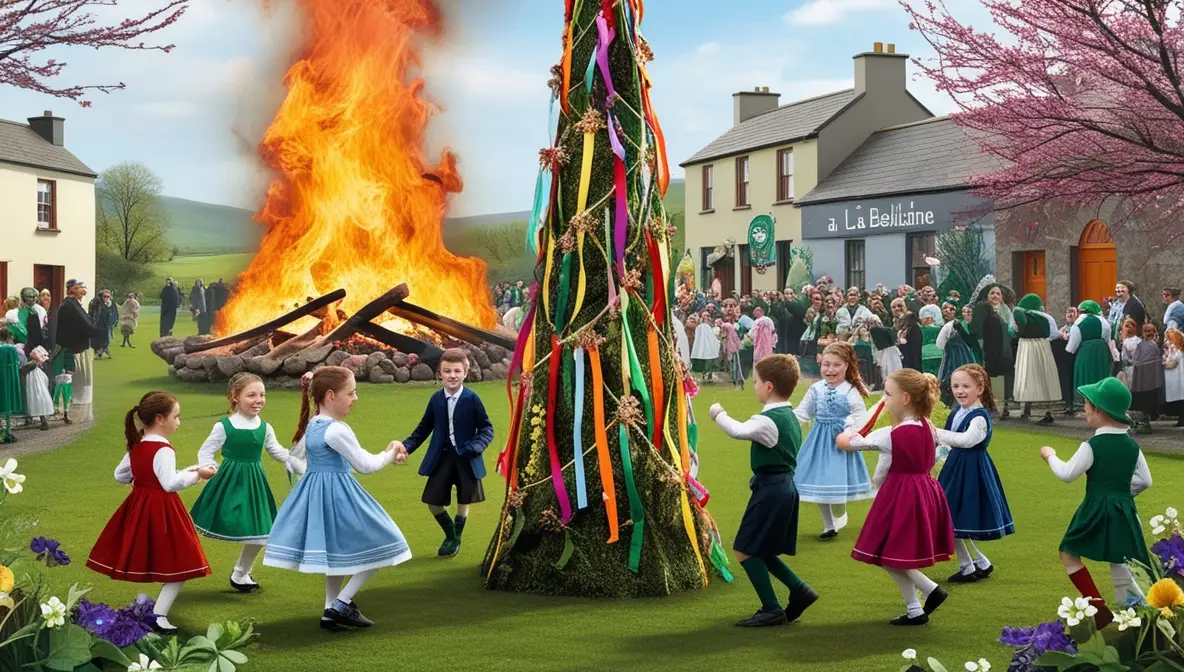
The onset of May is steeped in the ancient Celtic tradition of Lá Bealtaine, marking the blooming of flowers and fruit-bearing trees. Traditionally, belfires, large bonfires constructed from various types of wood, are lit on the eve of May Day. Each wood type carries distinct spiritual significance and was historically believed to ensure the fertility of the land and livestock for the year ahead.
The designation of the first Monday of May as a public holiday stems from the Public Holiday Regulations 1993 Act, with the holiday being first observed in 1994. Further details on the history of this holiday can be found in Timeanddate.com’s general article on May Day/Labor Day.
Symbols
The maypole stands as a time-honored emblem of May Day and fertility within the Republic of Ireland. Typically towering at three or more meters (ten or more feet), the maypole is adorned with vibrant ribbons. Children and youth traditionally engage in dances around the maypole, clutching one or more ribbons. Upon completing the dances, the ribbons form an intricate pattern on the pole. Historically, these May Day dances symbolized the commencement of the courting season for young people.
Frequently Asked Questions (FAQs)
When is May Day?
May Day is celebrated globally on May 1st every year. In 2026, May Day falls on a Friday. In 2027, it will be on a Saturday, and in 2028, it will fall on a Monday.
Is May Day a public holiday?
In many countries, yes. May 1st is designated as a public or bank holiday (often celebrated as International Workers’ Day or Labor Day) in over 80 nations across Europe, Asia, Africa, and the Americas. However, in the United States and Canada, May Day is not a federal public holiday, as those nations celebrate Labor Day in September.
What is the difference between May Day and International Workers’ Day?
While both occur on May 1st, they have entirely different roots:
- May Day: A traditional European spring festival dating back to ancient Pagan times (including the Gaelic Beltane), focused on fertility, flowers, and agriculture.
- International Workers’ Day: A modern holiday born out of the late 19th-century labor union movement—specifically commemorating the Haymarket Affair in Chicago (1886) and the fight for the 8-hour workday.
Why do people dance around a Maypole on May Day?
The maypole is a traditional spring symbol of fertility and new growth. Historically, young people danced around a tall wooden pole decorated with flowers and long, colorful ribbons. As they weave in and out, the ribbons wrap around the pole in intricate patterns, symbolizing the coming together of the community and the return of warm weather.
Why doesn’t the United States observe International Workers’ Day on May 1st?
Although the events that inspired International Workers’ Day occurred in Chicago, U.S. President Grover Cleveland officially established “Labor Day” on the first Monday of September in 1894. This decision was deliberately made to distance the federal holiday from the socialist and anarchist associations connected with the May 1st demonstrations.

Chokri Hamouda runs Calendarena.com. He makes simple, printable calendar templates. His goal is to help people organize their time better. He updates the site with monthly and yearly calendars for users worldwide. Chokri focuses on making calendars that are easy to read and use. He also researches holidays and date systems to keep everything accurate.