
Republic Day is celebrated every year on January 26 in India. The day marks the adoption of the Constitution of India in 1950 and is one of the country’s three national holidays. Millions of people celebrate with parades, flag hoisting ceremonies, cultural programs, and patriotic events across India.
Below you’ll find upcoming Republic Day dates, its history, significance, and traditions.
| Date | Name | Day | Week | Days left |
|---|---|---|---|---|
| January 26, 2027 | Republic Day 2027 | Tuesday | 4 | 147 |
| January 26, 2028 | Republic Day 2028 | Wednesday | 4 | 512 |
| January 26, 2029 | Republic Day 2029 | Friday | 4 | 878 |
| January 26, 2030 | Republic Day 2030 | Saturday | 4 | 1243 |
| January 26, 2031 | Republic Day 2031 | Sunday | 4 | 1608 |
| January 26, 2032 | Republic Day 2032 | Monday | 5 | 1973 |
| January 26, 2033 | Republic Day 2033 | Wednesday | 4 | 2339 |
| January 26, 2034 | Republic Day 2034 | Thursday | 4 | 2704 |
| January 26, 2035 | Republic Day 2035 | Friday | 4 | 3069 |
Celebrating India’s Republic Day: A Comprehensive Guide
Republic Day in India is a monumental occasion, celebrated with immense fervor and patriotism across the country. Observed on January 26th each year, it marks the date when the Constitution of India came into effect in 1950, transforming India into a newly formed republic.
Historical Significance of Republic Day
The history of Republic Day is deeply rooted in India’s struggle for independence. After gaining independence from British rule on August 15, 1947, India needed a constitution to govern its people. A drafting committee, headed by Dr. B.R. Ambedkar, was appointed to draft a permanent constitution. On November 26, 1949, the Indian Constitution was adopted, and it came into effect on January 26, 1950, commemorating the declaration of Purna Swaraj (complete independence) by the Indian National Congress on January 26, 1930.
Key Events Leading to Republic Day
1930: The Indian National Congress declares Purna Swaraj on January 26. 1947: India attains independence on August 15. 1949: The Constitution of India is adopted on November 26. 1950: The Constitution comes into effect on January 26.
Republic Day Celebrations
National Parade
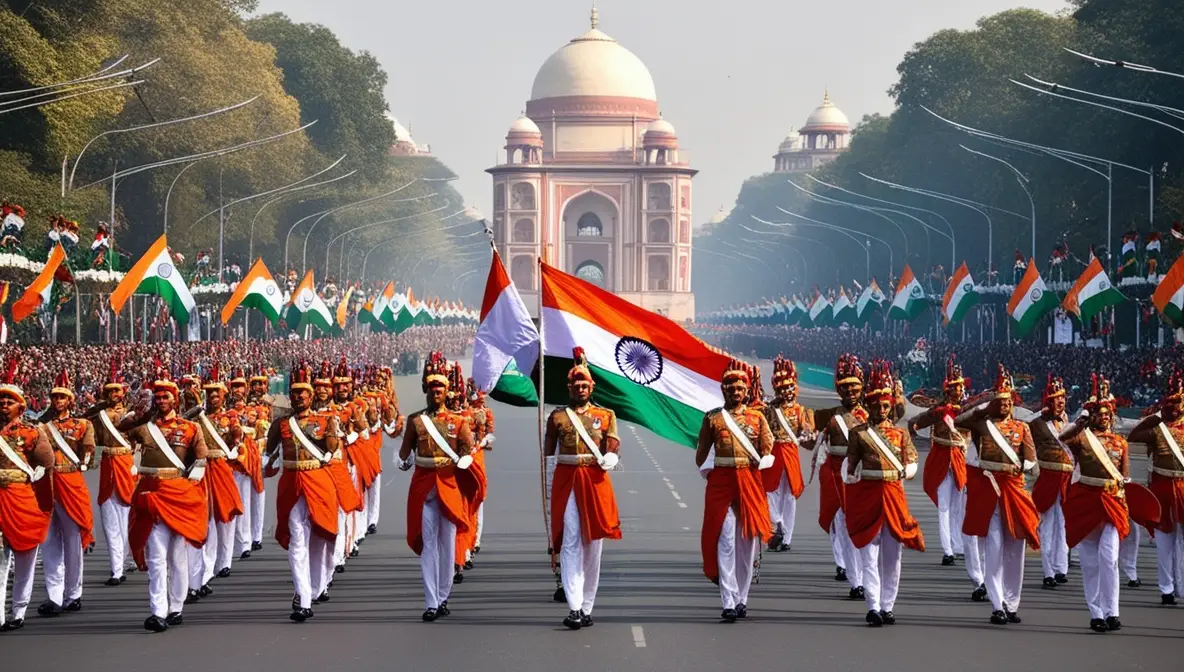
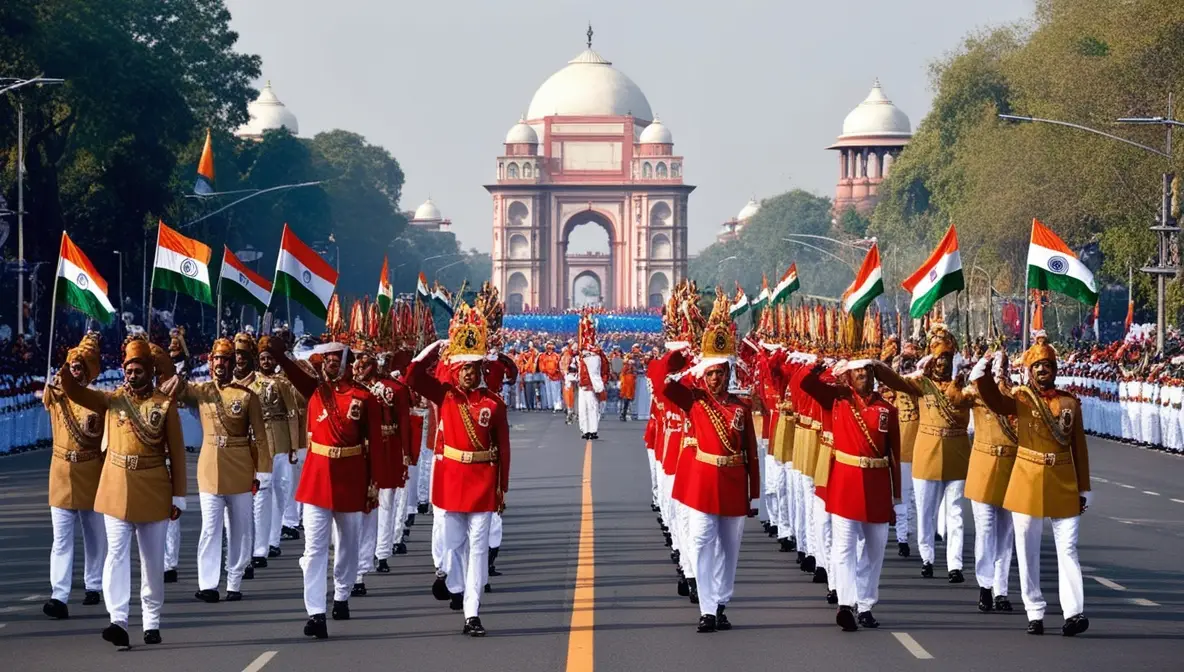
The most prominent event is the Republic Day Parade, held in the capital city, New Delhi, at Rajpath. The parade showcases India’s cultural diversity, military prowess, and advancements in various fields. The President of India, who is the Supreme Commander of the Armed Forces, takes the salute.
Parade Highlights
- Tableaux: Various states and union territories present their cultural and historical heritage through beautifully decorated floats.
- Military Display: The armed forces display their strength and discipline through various drills and the exhibition of military equipment.
- Cultural Performances: School children and folk artists perform dances and songs that highlight India’s rich cultural diversity.
Beating Retreat Ceremony
Held on January 29th, this ceremony marks the end of Republic Day celebrations. It takes place at Vijay Chowk in New Delhi and involves performances by bands of the Indian Army, Navy, and Air Force. The ceremony concludes with the lowering of the national flag and the playing of the national anthem.
Award Ceremonies
On Republic Day, the President of India awards the Padma Awards, including Padma Vibhushan, Padma Bhushan, and Padma Shri, to civilians for their exceptional service in various fields. The bravery awards, such as the Param Vir Chakra, Ashoka Chakra, and Kirti Chakra, are also presented to the armed forces and civilians.
Republic Day Across the States
While New Delhi hosts the grand national parade, each state capital also organizes its own celebrations, featuring parades, cultural performances, and patriotic displays. Local schools and organizations participate actively, instilling a sense of national pride among the citizens.
Celebrations in Major Cities
- Mumbai: The parade at Shivaji Park features a display of Maharashtra’s cultural heritage.
- Kolkata: The parade on Red Road includes cultural programs and a military display.
- Chennai: The celebrations at Marina Beach highlight Tamil Nadu’s rich traditions.
The Importance of Republic Day
Republic Day is not just a national holiday; it is a day of immense pride and honor for every Indian. It signifies the transition of India into a sovereign republic and celebrates the values enshrined in the Constitution – justice, liberty, equality, and fraternity.
Republic Day is a celebration of India’s unity, diversity, and democratic values. It is a day to remember the sacrifices of our freedom fighters and to reaffirm our commitment to the principles that guide our nation. As we celebrate this day, let us honor our Constitution and strive to uphold the ideals that make India a proud and vibrant republic. Happy Indian Republic Day to all!
Upcoming Holidays and Celebrations in india
| Date | Type | Name |
|---|---|---|
| 04 September 2026 | Event | Janmashtami |
| 05 September 2026 | Event | International Day of Charity |
| 05 September 2026 | Event | Teachers' Day |
| 08 September 2026 | Event | International Literacy Day |
| 08 September 2026 | Event | World Literacy Day |
| 10 September 2026 | Event | International Makeup Day |
| 10 September 2026 | Event | World Suicide Prevention Day |
| 13 September 2026 | Event | Grandparents' Day 2026 |
| 14 September 2026 | Event | Ganesh Chaturthi 2026 |
| 14 September 2026 | Holiday | Hindi Diwas |
| 15 September 2026 | Event | Engineer's Day |
| 15 September 2026 | Event | International Coastal Cleanup Day |
| 15 September 2026 | Event | International Dot Day |
| 16 September 2026 | Event | Vishwakarma Puja |
| 20 September 2026 | Event | World Cleanup Day |
| 21 September 2026 | Event | International Day of Peace |
| 21 September 2026 | Event | World Gratitude Day |
| 22 September 2026 | Event | Autumnal Equinox |
| 25 September 2026 | Event | Anant Chaturdashi |
| 27 September 2026 | Event | World Tourism Day |
Frequently Asked Questions
When is this national holiday celebrated in India?
This national holiday is observed every year on January 26. It marks the day the Constitution of India came into effect in 1950, officially establishing the country as a republic.
Why is January 26 important in Indian history?
January 26 was chosen because the Constitution came into force on this date in 1950. It also honors the Purna Swaraj (Complete Independence) Declaration made on January 26, 1930, which symbolized India’s aspiration for full self-rule.
Is January 26 a public holiday in India?
Yes. January 26 is one of India’s three national holidays. Government offices, schools, banks, and many businesses are closed, while official ceremonies and community celebrations take place across the country.
Why is this day significant?
The occasion celebrates the adoption of the Constitution and India’s transition into a sovereign democratic republic. It reflects the nation’s commitment to democracy, justice, liberty, equality, and unity.
Where is the main national parade held?
The country’s principal parade takes place along Kartavya Path in New Delhi. It features military contingents, cultural tableaux from states and union territories, marching bands, school performances, and a flypast by the Indian Air Force.
Who takes part in the national celebrations?
The President of India presides over the ceremony as the Commander-in-Chief of the Armed Forces. The Prime Minister, government officials, military personnel, foreign dignitaries, and thousands of spectators also participate.
What happens during the celebrations?
The day’s events include the national flag hoisting, a grand parade, cultural performances, military demonstrations, gallantry award presentations, and patriotic programs. The celebrations conclude with the Beating Retreat ceremony on January 29.
What is the Beating Retreat ceremony?
Held on January 29 at Vijay Chowk in New Delhi, the Beating Retreat ceremony marks the official conclusion of the national celebrations. Bands from the Indian Army, Navy, and Air Force perform traditional military music during the event.
How is this holiday different from Independence Day?
The January celebration commemorates the adoption of the Constitution in 1950, while Independence Day, observed on August 15, marks India’s independence from British rule in 1947. Together, these occasions celebrate two defining milestones in the nation’s history.
Is it celebrated only in New Delhi?
No. Although the largest official events are held in the capital, states, cities, schools, colleges, and local communities across India organize flag-hoisting ceremonies, parades, cultural programs, and patriotic activities.
Does the date change every year?
No. The celebration always takes place on January 26, regardless of the day of the week.
Why does this occasion remain important today?
The annual observance highlights the enduring importance of the Constitution and the democratic values that guide the nation. It also provides an opportunity to honor the service of the armed forces, recognize national achievements, and strengthen the spirit of unity and citizenship.

Chokri Hamouda runs Calendarena.com. He makes simple, printable calendar templates. His goal is to help people organize their time better. He updates the site with monthly and yearly calendars for users worldwide. Chokri focuses on making calendars that are easy to read and use. He also researches holidays and date systems to keep everything accurate.