
Corpus Christi Dates:
| Date | Name | Day | Week | Days left |
|---|---|---|---|---|
| May 27, 2027 | Corpus Christi 2027 | Thursday | 21 | 229 |
| June 15, 2028 | Corpus Christi 2028 | Thursday | 24 | 614 |
| May 31, 2029 | Corpus Christi 2029 | Thursday | 22 | 964 |
| June 20, 2030 | Corpus Christi 2030 | Thursday | 25 | 1349 |
Celebrating Corpus Christi: A Deep Dive into Its Significance
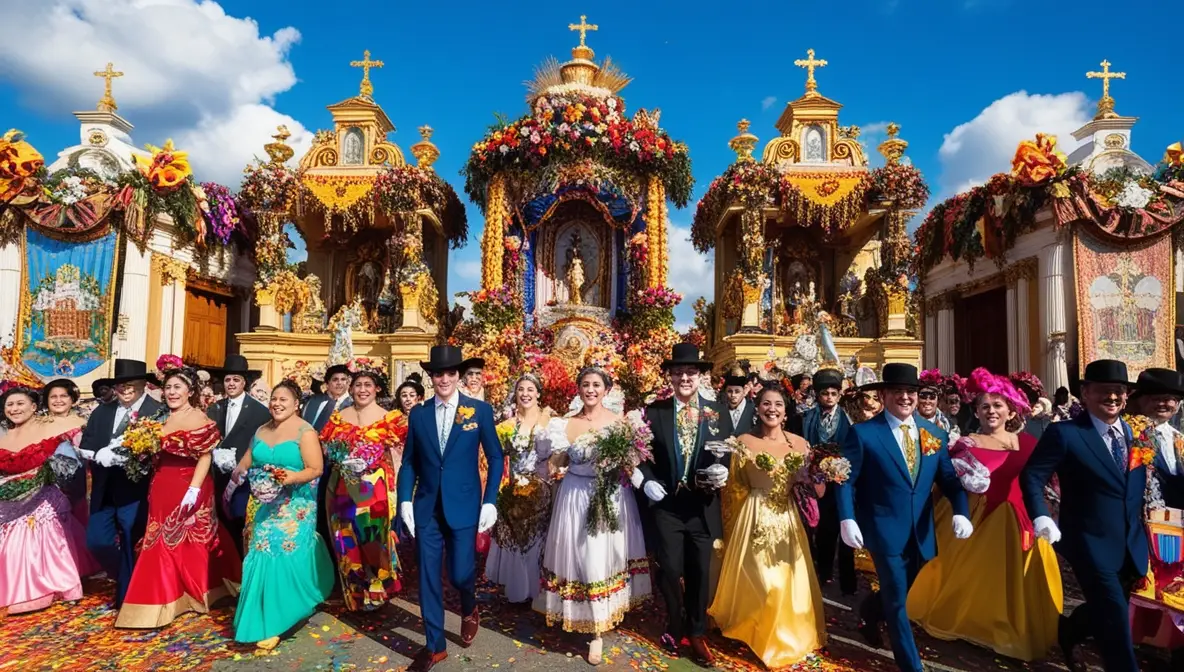
On May 30, 2024, Christians around the world will observe the Feast of Corpus Christi, a sacred event celebrated annually on the Thursday following Trinity Sunday. The term “Corpus Christi” is Latin for “Body of Christ,” symbolizing the belief that during Holy Communion, the bread and wine represent the actual body and blood of Jesus Christ. This feast offers a unique opportunity for the faithful to experience the presence of Jesus on Earth.
The Origins of Corpus Christi
The roots of Corpus Christi date back to the 13th century, when Italian priest St. Thomas Aquinas proposed to Pope Urban IV the establishment of a feast dedicated solely to the Holy Eucharist. The Eucharist, synonymous with Holy Communion, highlights the belief that Jesus is truly present in the bread and wine—a concept deeply rooted in the Last Supper, where Jesus shared bread and wine with his disciples.
One of the significant aspects of Maundy Thursday was the celebration of the Eucharist, which included rituals like foot washing and the commitment to priesthood. After confirming the authenticity of the Eucharistic Miracle of Bolsena, Pope Urban IV officially instituted the Feast of Corpus Christi in 1264, urging its observance throughout Roman Catholic Churches. Over the centuries, Pope Pius V refined the General Roman Calendar, retaining only two key feast days: Corpus Christi and Trinity Sunday.
Understanding the Eucharist
The Eucharist is one of the most revered sacraments in Christianity, originating from the Last Supper when Jesus instructed his disciples to partake in the bread and wine as symbols of his body and blood. This sacrament becomes a focal point during Mass, where the bread and wine are consecrated at the altar and consumed by the congregation, serving as a reminder of Jesus’ ultimate sacrifice.
Observing Corpus Christi
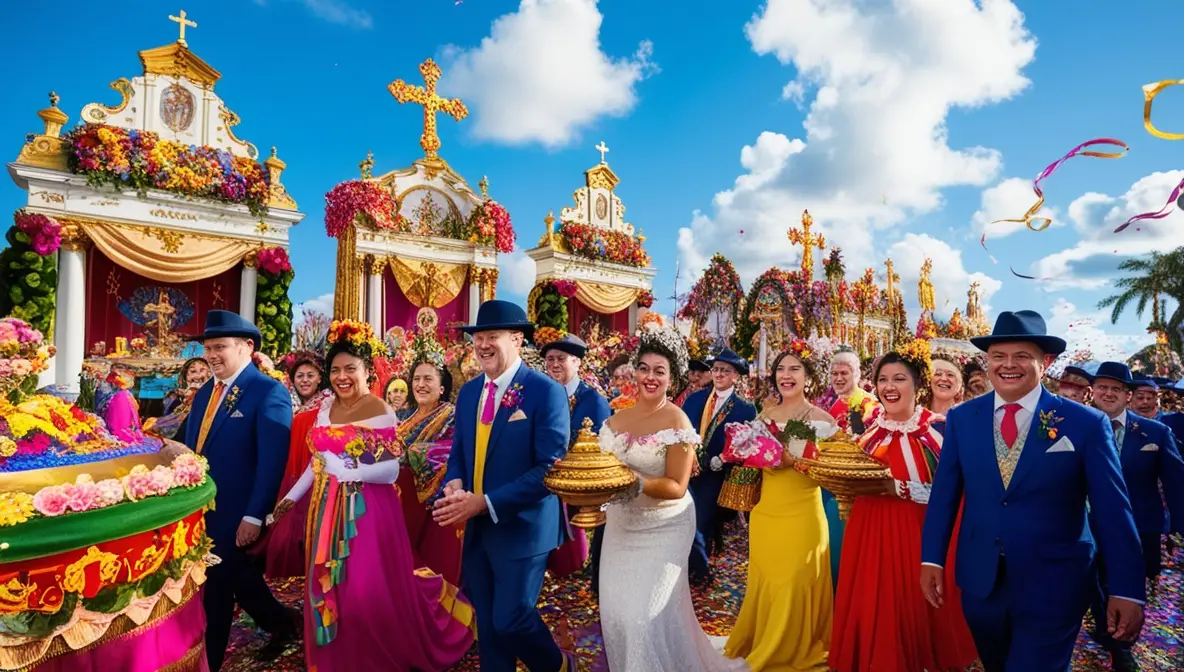
As a holy day of obligation, all Christians are encouraged to participate in the Mass on Corpus Christi. The day often features a vibrant procession, where parishioners come together to celebrate their faith. Churches and altars are adorned with beautiful flowers, tapestries, and banners, creating a festive atmosphere. In many traditions, four additional altars are set up along the procession route, each decorated with religious imagery and floral arrangements.
Gospel readings are an integral part of the celebration, and many attendees wear their finest communion attire. It is also customary for Catholics to receive communion on this day, with many children celebrating their First Communion during the festivities.
A Historical Note
The significance of Corpus Christi extends beyond religious observance; it has even influenced geography. In 1519, explorer Alonzo Pineda named a bay in Texas “Corpus Christi,” reflecting the feast’s profound impact.
The Feast of Corpus Christi is more than a religious observance; it is a celebration of faith, community, and the divine presence of Jesus Christ. As we prepare for this important day, let us reflect on its meaning and significance in our lives.
Frequently Asked Questions:
When is Corpus Christi celebrated?
Corpus Christi is celebrated 60 days after Easter Sunday, which means its date changes every year. In many countries, it is observed on a Thursday, while others transfer the celebration to the following Sunday to allow more people to participate in church services.
Why does the date of Corpus Christi change every year?
The date of Corpus Christi depends on the date of Easter, which is calculated using the lunar calendar. Since Easter falls on a different date each year, Corpus Christi also changes annually.
What does “Corpus Christi” mean?
Corpus Christi is a Latin phrase that means “Body of Christ.” The feast celebrates the Catholic belief in the Real Presence of Jesus Christ in the Eucharist, where the consecrated bread and wine become the Body and Blood of Christ.
Why is Corpus Christi important?
Corpus Christi is one of the most significant feasts in the Catholic Church because it honors the Eucharist, a central part of Catholic worship. The celebration gives believers an opportunity to publicly express their faith through Mass, prayer, and Eucharistic processions.
Is Corpus Christi a public holiday?
Corpus Christi is a public holiday in several countries and regions, including parts of Austria, Brazil, Colombia, Croatia, Poland, Portugal, Spain, and Germany. In other countries, it is observed as a religious feast without being an official public holiday. Public holiday status may also vary by state or municipality.
How is Corpus Christi celebrated?
Celebrations vary around the world but often include:
- Special church services and Masses
- Eucharistic processions through streets and town squares
- Prayer and Eucharistic adoration
- Decorating churches and procession routes with flowers
- Community gatherings and religious events
Many communities create colorful flower carpets or decorate public spaces as part of the celebration.
Which Christian denominations celebrate Corpus Christi?
Corpus Christi is primarily celebrated by the Roman Catholic Church. Some Anglican, Lutheran, and other Western Christian churches also observe the feast, although traditions and levels of observance vary.
What is the difference between Corpus Christi and Holy Thursday?
Both celebrations focus on the Eucharist, but they commemorate different events. Holy Thursday remembers the Last Supper, when Jesus instituted the Eucharist before His crucifixion. Corpus Christi is a separate feast dedicated entirely to honoring the Body and Blood of Christ, allowing for joyful public celebrations outside the solemn context of Holy Week.
Why are Eucharistic processions held on Corpus Christi?
Eucharistic processions are a traditional way for Catholics to publicly profess their faith in the Real Presence of Christ in the Eucharist. During the procession, the consecrated Host is carried in a decorative vessel called a monstrance while participants pray, sing hymns, and follow the Blessed Sacrament through the streets.
How are Corpus Christi dates determined?
Corpus Christi is observed on the Thursday after Trinity Sunday, which is itself celebrated one week after Pentecost. As a result, Corpus Christi always falls 60 days after Easter Sunday, causing the date to change each year.
Is Corpus Christi celebrated worldwide?
Yes. Corpus Christi is celebrated by Catholic communities around the world. While customs differ from country to country, the feast is observed across Europe, North and South America, Africa, Asia, and Oceania with Masses, processions, and local traditions.
What are the upcoming Corpus Christi dates?
The date of Corpus Christi changes every year. Check the dates table above for the current year and upcoming celebrations, including 2026, 2027, 2028, and future years.

Chokri Hamouda runs Calendarena.com. He makes simple, printable calendar templates. His goal is to help people organize their time better. He updates the site with monthly and yearly calendars for users worldwide. Chokri focuses on making calendars that are easy to read and use. He also researches holidays and date systems to keep everything accurate.