
When is Shavuot Dates 2027-2031:
| Date | Name | Day | Week | Days left |
|---|---|---|---|---|
| June 5, 2027 | Shavuot 2027 | Saturday | 22 | 238 |
| May 25, 2028 | Shavuot 2028 | Thursday | 21 | 593 |
| June 12, 2029 | Shavuot 2029 | Tuesday | 24 | 976 |
| June 1, 2030 | Shavuot 2030 | Saturday | 22 | 1330 |
Quick Facts:
| Fact | Details |
|---|---|
| Holiday Name | Shavuot |
| Hebrew Name | שָׁבוּעוֹת (Shavuot) |
| Meaning | “Weeks” or “Feast of Weeks” |
| Religion | Judaism |
| Observed By | Jewish communities around the world |
| Date | Celebrated on the 6th of Sivan in the Hebrew calendar (7th of Sivan for the second day in many Diaspora communities) |
| 2026 Dates | Begins at sundown on Thursday, May 21, 2026; ends at nightfall on Friday, May 22, 2026 in Israel and Saturday, May 23, 2026 in many Diaspora communities |
| 2027 Dates | Begins at sundown on Thursday, June 10, 2027; ends at nightfall on Friday, June 11, 2027 in Israel and Saturday, June 12, 2027 in many Diaspora communities |
| Duration | One day in Israel; two days in many Jewish communities outside Israel |
| Also Known As | Feast of Weeks, Festival of Weeks, חג השבועות (Chag HaShavuot) |
| Significance | Celebrates the giving of the Torah at Mount Sinai and the wheat harvest in ancient Israel |
| Traditional Foods | Cheesecake, blintzes, cheese dishes, dairy meals, fresh fruits |
| Traditional Customs | Studying the Torah, reading the Book of Ruth, attending synagogue services, decorating with flowers and greenery, festive family meals |
The Feast of Weeks
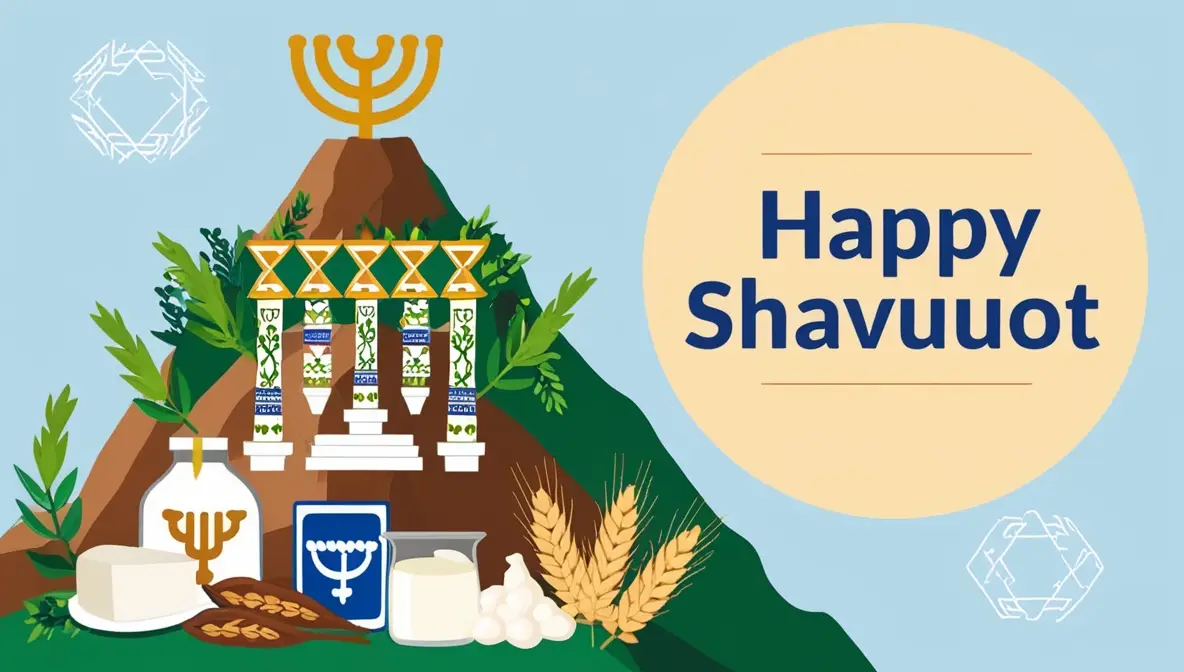
Shavuot, also known as the Feast of Weeks, is a significant Jewish holiday celebrated fifty days after Passover. It marks two important events: the wheat harvest in Israel and the moment when God gave the Torah to the people of Israel at Mount Sinai.
While Shavuot is not a public holiday in North America or the UK, many Jewish-owned businesses may close to allow their owners to observe the holiday.
History of Shavuot
Fifty days after their exodus from Egypt, the Israelites arrived at Mount Sinai, where God gave Moses the Torah, including the Ten Commandments. Shavuot commemorates the Jewish people’s commitment to serve and obey God and His divine law.
Biblically, Shavuot is linked to the harvesting season in Israel, lasting seven weeks. This connection is reflected in its name, which means “weeks” in Hebrew. As a pilgrimage festival, Jewish men traveled to Jerusalem to offer the first fruits of their harvest to God.
Observing Feast of Weeks
As a community-centered holiday, many people take the day off work to gather in synagogues for special Shavuot prayers. Here are some key rituals and customs associated with Shavuot:
- Consuming dairy products, such as milk and cheese
- Studying the Torah through the night
- Reading the Book of Ruth during morning rituals
- Decorating homes and synagogues with plants and greenery
- Reciting the Akdamut, a liturgical poem, during synagogue services
Shavuot is also related to Pentecost, which occurs 50 days after Passover in the Gregorian calendar, unlike the Jewish lunar calendar.
Celebrate Shavuot with these traditions and remember its rich history and significance in the Jewish faith.
Frequently Asked Questions
When is Shavuot in 2026?
In 2026, Shavuot begins at sundown on Thursday, May 21, 2026. In Israel, the holiday ends after nightfall on Friday, May 22, 2026. In many Jewish communities outside Israel, Shavuot is observed for two days and concludes after nightfall on Saturday, May 23, 2026.
When is Feast of Weeks in 2027?
In 2027, Shavuot begins at sundown on Thursday, June 10, 2027. It ends after nightfall on Friday, June 11, 2027 in Israel and after nightfall on Saturday, June 12, 2027 in many Jewish communities outside Israel.
What is Feast of Weeks?
Shavuot is one of Judaism’s three major pilgrimage festivals. It commemorates the giving of the Torah to the Israelites at Mount Sinai and also celebrates the wheat harvest in the Land of Israel. The holiday is observed seven weeks after Passover.
Why is Shavuot called the Feast of Weeks?
The Hebrew word Shavuot means “Weeks.” The holiday is celebrated after counting seven full weeks (49 days) from the second day of Passover, a tradition known as the Counting of the Omer.
Why does the date of Feast of Weeks change every year?
Shavuot follows the Hebrew lunar calendar rather than the Gregorian calendar. As a result, its dates change each year on the civil calendar while always falling on the 6th of Sivan (and the 7th of Sivan for the second day observed in many Diaspora communities).
How long does last?
Shavuot lasts one day in Israel. In many Jewish communities outside Israel, the holiday is observed for two days, following longstanding Jewish tradition.
How is Shavuot celebrated?
Many people celebrate Shavuot by attending synagogue services, studying the Torah, reading the Book of Ruth, decorating homes and synagogues with flowers, enjoying festive meals, and spending time with family and friends.
Why are dairy foods eaten on Shavuot?
Eating dairy foods is a long-standing Shavuot tradition. Popular dishes include cheesecake, blintzes, and cheese-filled pastries. Various religious traditions explain the custom, including symbolic connections between the Torah and nourishment.
What is the Counting of the Omer?
The Counting of the Omer is a 49-day period that begins on the second evening of Passover and ends with Shavuot. During this time, many Jewish people count each day in preparation for the celebration of receiving the Torah.
Is Feast of Weeks a public holiday?
Shavuot is a national public holiday in Israel, where many businesses and schools close. In most other countries, it is observed as a religious holiday rather than a public holiday, although Jewish communities gather for worship and celebration.
What is the Book of Ruth?
The Book of Ruth is traditionally read during Shavuot because its story takes place during the harvest season and emphasizes themes of kindness, faith, and commitment. It also highlights the agricultural significance of the holiday.
What are the traditional symbols of Feast of Weeks?
Common symbols of Shavuot include wheat, the first fruits (Bikkurim), flowers and greenery, the Ten Commandments, Torah scrolls, and dairy foods. These symbols reflect both the agricultural harvest and the giving of the Torah.

Chokri Hamouda runs Calendarena.com. He makes simple, printable calendar templates. His goal is to help people organize their time better. He updates the site with monthly and yearly calendars for users worldwide. Chokri focuses on making calendars that are easy to read and use. He also researches holidays and date systems to keep everything accurate.