
When Is the Dred Scott Case Anniversary? (2027–2032)
| Date | Name | Day | Week | Days left |
|---|---|---|---|---|
| March 6, 2026 | Dred Scott Case 2026 | Friday | 10 | - |
| March 6, 2027 | Dred Scott Case 2027 | Saturday | 9 | 143 |
| March 6, 2028 | Dred Scott Case 2028 | Monday | 10 | 509 |
| March 6, 2029 | Dred Scott Case 2029 | Tuesday | 10 | 874 |
| March 6, 2030 | Dred Scott Case 2030 | Wednesday | 10 | 1239 |
| March 6, 2031 | Dred Scott Case 2031 | Thursday | 10 | 1604 |
| March 6, 2032 | Dred Scott Case 2032 | Saturday | 10 | 1970 |
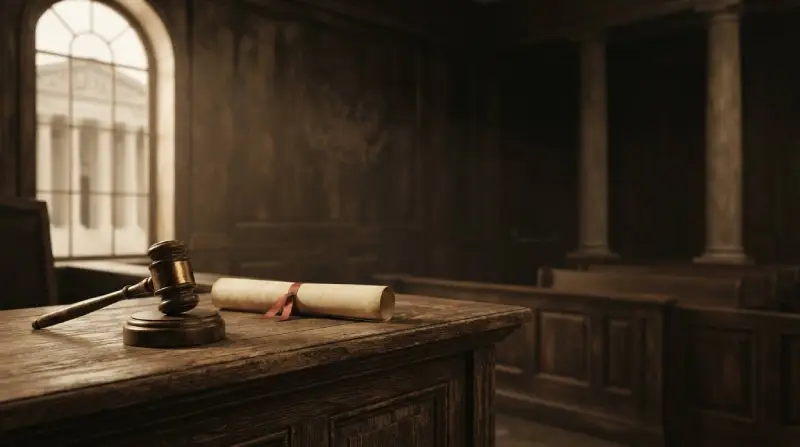
Dred Scott Case — Date, History & Current Status Explained
The Dred Scott case anniversary falls on March 6 each year, marking the U.S. Supreme Court’s 1857 ruling in Dred Scott v. Sandford. It is not an official public holiday; federal, state, and local offices remain open.
March 6 is not a federal, state, or public holiday in the United States. Government offices, schools, courts, and businesses operate on their regular schedules on this date every year.
What Was the Dred Scott Case?
Dred Scott was an enslaved man held by John Emerson, a U.S. Army surgeon. Between 1833 and 1843, Emerson took Scott to live in Illinois, a free state, and later to the Wisconsin Territory, where the Missouri Compromise of 1820 prohibited slavery. After Emerson’s death, Scott sued for his freedom and that of his wife, Harriet, arguing that residence on free soil had made them free.
Scott first filed suit in Missouri state court in 1846. After years of appeals and a reversal by the Missouri Supreme Court in 1852, the case moved to federal court and ultimately reached the U.S. Supreme Court as Dred Scott v. Sandford, 60 U.S. 393 (1857). The named defendant, John F. A. Sanford, was the executor of the estate that held the Scott family (court records misspelled his surname as “Sandford”).
The Supreme Court’s Decision
Chief Justice Roger B. Taney delivered the majority opinion on March 6, 1857, in a 7–2 ruling. The Court held that people of African descent, whether enslaved or free, were not and could never become citizens of the United States under the Constitution, and therefore lacked standing to sue in federal court. On that basis, Taney found the Court lacked jurisdiction to hear the case.
The opinion went further, holding that the Missouri Compromise’s restriction on slavery in federal territories was unconstitutional because it deprived slaveholders of property without due process under the Fifth Amendment. This second holding meant Congress could not prohibit slavery in U.S. territories, invalidating a compromise that had structured the national debate over slavery’s expansion for nearly four decades.
Dissenting Opinions
Justices Benjamin Robbins Curtis and John McLean dissented. Curtis argued that free Black men had been recognized as citizens with voting rights in several states at the time the Constitution was ratified, directly contradicting Taney’s reasoning. McLean’s dissent similarly rejected the majority’s citizenship analysis and its treatment of the Missouri Compromise. Both dissents were published alongside the majority opinion and remain part of the official case record available through law schools and court archives.
Legacy and Later Reversal
The ruling intensified national conflict over slavery in the years leading to the Civil War and is widely cited by historians and legal scholars as a contributing factor to the war’s outbreak in 1861. The decision was formally superseded by constitutional amendment rather than by a later Supreme Court ruling: the Thirteenth Amendment (1865) abolished slavery, and the Fourteenth Amendment (1868) established that all persons born or naturalized in the United States, including formerly enslaved people, are citizens — directly overturning the citizenship holding in Dred Scott.
Dred Scott and Harriet Scott were manumitted (freed) by a subsequent owner in May 1857, shortly after the ruling. Dred Scott died in St. Louis in September 1858. Legal historians, including Pulitzer Prize–winning author Don E. Fehrenbacher, have documented the case extensively as a turning point in American constitutional law and the history of slavery in the United States.
Political Fallout Before the Civil War
The ruling became a central issue in national politics within months of its release. During the 1858 Illinois Senate campaign, Abraham Lincoln and Stephen Douglas debated the decision directly across seven public debates, with Lincoln arguing the ruling should not be treated as permanently settled law and Douglas defending the Court’s authority to decide it. Republican Party platforms in 1856 and 1860 opposed the ruling’s territorial holding, while Southern Democrats cited it as constitutional confirmation that slaveholders could bring enslaved people into any federal territory.
Historians widely identify the decision as one of several events that deepened sectional division between North and South in the years before the Civil War began in April 1861. Congressional debate over slavery’s expansion into new territories, already contentious after the Kansas-Nebraska Act of 1854, intensified further once the Missouri Compromise’s territorial restriction was declared unconstitutional. The case is taught today in U.S. history and constitutional law courses as a case study in how judicial rulings interact with legislative compromise and national politics.
Dred and Harriet Scott
Dred Scott was born enslaved in Virginia in the late 1700s and was later taken to Missouri. He married Harriet Robinson, also enslaved, around 1837, and the couple had two daughters, Eliza and Lizzie. Harriet’s case was consolidated with Dred’s during the Missouri court proceedings, though the Supreme Court’s opinion is recorded under Dred Scott’s name alone. Following their manumission in 1857, the Scott family lived as free residents of St. Louis until Dred Scott’s death the following year.
Frequently Asked Questions about the Dred Scott Case
Q: What was the Dred Scott case about?
A: Dred Scott sued for his freedom, arguing his residence in free territory made him a free man. The Supreme Court ruled against him in 1857.
Q: When was the Dred Scott decision issued?
A: The U.S. Supreme Court issued its ruling on March 6, 1857. This date is the case’s historical anniversary, not a public holiday.
Q: Is the Dred Scott case anniversary a federal holiday?
A: No. March 6 is not a federal, state, or public holiday. Government offices and courts remain open on this date.
Q: What did the Supreme Court rule in Dred Scott v. Sandford?
A: The Court held that people of African descent could not be U.S. citizens and that Congress could not ban slavery in federal territories.
Q: Who dissented in the Dred Scott decision?
A: Justices Benjamin Robbins Curtis and John McLean dissented, disputing the majority’s reasoning on citizenship and the Missouri Compromise.
Q: What happened to Dred Scott after the ruling?
A: Scott and his family were freed by their owner in May 1857. Dred Scott died in St. Louis in September 1858.
Q: How was the Dred Scott decision overturned?
A: The Thirteenth Amendment (1865) and Fourteenth Amendment (1868) reversed the ruling by abolishing slavery and defining citizenship for all persons born in the United States.
Q: Why is the Dred Scott case still studied today?
A: Law schools and historians cite it as a landmark example of constitutional interpretation and its role in the events leading to the Civil War, according to case archives at Oyez and the full opinion text hosted by Cornell Law School’s Legal Information Institute.
Upcoming Holidays And Celebrations:
| Date | Type | Name |
|---|---|---|
| 15 October 2026 | Event | Global Handwashing Day |
| 15 October 2026 | Event | Spirit Day 2026 |
| 15 October 2026 | Event | White Cane Safety Day |
| 16 October 2026 | Event | Boss’s Day |
| 16 October 2026 | Event | World Food Day |
| 17 October 2026 | Event | International Day for the Eradication of Poverty |
| 17 October 2026 | Event | Sweetest Day 2026 |
| 17 October 2026 | National day | National Pasta Day |
| 18 October 2026 | Event | Alaska Day |
| 20 October 2026 | Event | International Sloth Day |
| 20 October 2026 | Event | Vijaya Dashami 2026 |
| 20 October 2026 | National day | National Pharmacy Technician Day 2026 |
| 21 October 2026 | Event | Back to the Future Day |
| 21 October 2026 | Event | Trafalgar Day |
| 21 October 2026 | Event | Unity Day 2026 |
| 21 October 2026 | National day | National Apple Day |
| 22 October 2026 | National day | National Color Day |
| 22 October 2026 | National day | National Nut Day |
| 23 October 2026 | National day | National Paralegal Day |
| 24 October 2026 | Event | Stock Market Crash |

Chokri Hamouda runs Calendarena.com. He makes simple, printable calendar templates. His goal is to help people organize their time better. He updates the site with monthly and yearly calendars for users worldwide. Chokri focuses on making calendars that are easy to read and use. He also researches holidays and date systems to keep everything accurate.