
St. Patrick’s Day Dates
| Date | Name | Day | Week | Days left |
|---|---|---|---|---|
| March 17, 2026 | St. Patrick's Day 2026 | Tuesday | 12 | - |
| March 17, 2027 | St. Patrick's Day 2027 | Wednesday | 11 | 141 |
| March 17, 2028 | St. Patrick's Day 2028 | Friday | 11 | 507 |
| March 17, 2029 | St. Patrick's Day 2029 | Saturday | 11 | 872 |
| March 17, 2030 | St. Patrick's Day 2030 | Sunday | 11 | 1237 |
Quick Facts:
- Event Name: St. Patrick’s Day
- Country: United Kingdom
- Next Date: Wednesday, March 17, 2027
- Holiday Type: Local Bank Holiday (Northern Ireland); Regular day / Observance (England, Scotland, Wales)
- Significance: Marks the death of St. Patrick, patron saint of Ireland
- Common Customs: Wearing green, displaying clovers, attending parades, visiting Irish pubs, and celebrating Irish culture
- Other Names / Languages: St. Patrick’s Day (English), St. Patricks dag (Norwegian)
Celebrating A Time-Honored Tradition
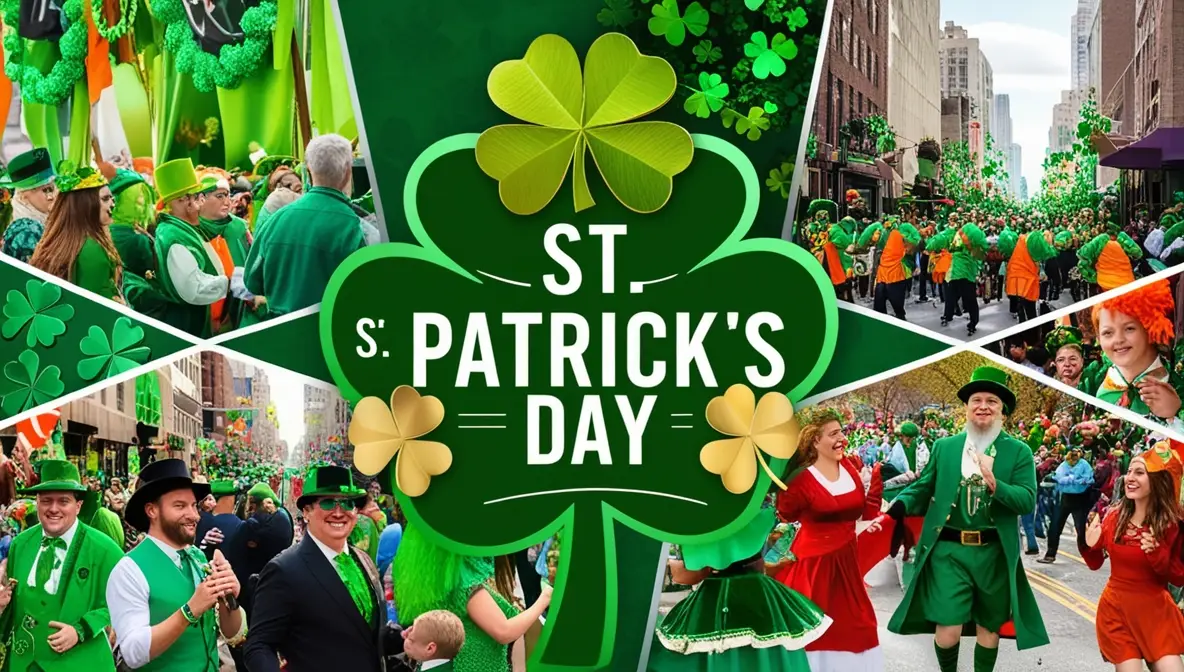
St. Patrick’s Day, observed annually on March 17th, holds a special place in the hearts of millions worldwide as a celebration of Irish culture and heritage. This festive occasion commemorates St. Patrick, the Patron Saint of Ireland, known for his missionary work and contributions to Christianity in Ireland during the 5th century.
The Origins of St. Patrick’s Day
St. Patrick’s Day traces its origins back to the life of St. Patrick himself. Born in 4th century Britain, St. Patrick was captured by Irish pirates at the age of 16 and taken to Ireland as a slave. After six years of captivity, he escaped and fled to France, where he became deeply religious and underwent Christian indoctrination.
In 432 AD, St. Patrick returned to Ireland with a mission to spread Christianity among the pagan Irish population. He is credited with building churches, monasteries, and schools throughout Ireland, establishing a lasting Christian legacy that continues to shape the country’s cultural identity.

St. Patrick’s Day in America: A Cultural Phenomenon
The celebration of St. Patrick’s Day in America can be traced back to the 18th century when Irish immigrants brought their traditions and festivities to the United States. The first St. Patrick’s Day parade took place in Boston in 1737, followed by New York City in 1762, marking the beginning of a cherished tradition among Irish Americans.
Today, St. Patrick’s Day is one of the most widely celebrated cultural holidays in the United States, characterized by lively parades, traditional Irish music and dance, and vibrant displays of green attire and shamrocks.
Traditions and Customs of St. Patrick’s Day
Wearing of the Green: One of the most enduring traditions of St. Patrick’s Day is the custom of wearing green clothing or accessories. This tradition is rooted in Irish folklore, where green is associated with Ireland’s lush landscapes and the shamrock, which St. Patrick used to explain the Holy Trinity.
Corned Beef and Cabbage: In America, a traditional St. Patrick’s Day meal is corned beef and cabbage. This culinary tradition originated in the 19th century among Irish immigrants who substituted corned beef for their traditional bacon due to its affordability and availability in the United States.
Celebratory Libations: Drinking and revelry are integral parts of St. Patrick’s Day celebrations, with pubs and bars across the country hosting festive gatherings. This tradition reflects the convivial spirit of the holiday, where friends and families come together to raise a glass in honor of St. Patrick and Irish culture.

St. Patrick’s Day Legends and Symbols
The Shamrock: According to legend, St. Patrick used the three-leaf shamrock to illustrate the concept of the Holy Trinity, making it a symbol of both religious faith and Irish identity. Today, the shamrock remains a prominent emblem of St. Patrick’s Day festivities, adorning decorations and attire throughout the celebrations.
The Dyeing of the River: In Chicago, a unique tradition involves dyeing the Chicago River green to kick off St. Patrick’s Day festivities. This vibrant spectacle dates back to 1962 and has since become a beloved tradition that draws thousands of spectators each year.
The Future of St. Patrick’s Day Celebrations
Looking ahead, St. Patrick’s Day continues to evolve as a global celebration of Irish culture and heritage. As we approach St. Patrick’s Day 2025 (See our 2027 calendar) and beyond, the traditions and customs associated with this beloved holiday will continue to unite communities and celebrate the enduring legacy of St. Patrick and the Irish spirit.
In conclusion, St. Patrick’s Day stands as a testament to the resilience and enduring influence of Irish culture around the world. From its humble origins in ancient Ireland to its vibrant celebrations in modern-day America, this holiday bridges the gap between tradition and contemporary festivities, ensuring that the legacy of St. Patrick lives on for generations to come.
Celebrate St. Patrick’s Day with joy, camaraderie, and a heartfelt appreciation for the rich cultural tapestry that defines this beloved holiday.
Upcoming Holidays And Celebrations:
| Date | Type | Name |
|---|---|---|
| 29 October 2026 | Event | World Stroke Day |
| 31 October 2026 | Event | Halloween |
| 01 November 2026 | Event | All Saints' Day |
| 01 November 2026 | Event | World Vegan Day |
| 02 November 2026 | Event | All Souls' Day |
| 05 November 2026 | Event | World Tsunami Awareness Day |
| 10 November 2026 | Event | World Science Day for Peace and Development |
| 11 November 2026 | Event | Singles Day |
| 13 November 2026 | Event | Kindness Week |
| 13 November 2026 | Event | World Kindness Day |
| 16 November 2026 | Event | International Day for Tolerance |
| 17 November 2026 | Event | World Prematurity Day |
| 19 November 2026 | Event | International Men's Day |
| 19 November 2026 | Event | World Philosophy Day 2026 |
| 19 November 2026 | Event | World Toilet Day |
| 21 November 2026 | Event | World Television Day |
| 25 November 2026 | Event | International Day for the Elimination of Violence Against Women |
| 27 November 2026 | Event | Black Friday 2026 |
| 30 November 2026 | Event | Cyber Monday 2026 |
| 30 November 2026 | Event | St Andrew's Day |

Chokri Hamouda runs Calendarena.com. He makes simple, printable calendar templates. His goal is to help people organize their time better. He updates the site with monthly and yearly calendars for users worldwide. Chokri focuses on making calendars that are easy to read and use. He also researches holidays and date systems to keep everything accurate.