
The Korean War Dates
| Date | Name | Day | Week | Days left |
|---|---|---|---|---|
| June 25, 2026 | Korean War 2026 | Thursday | 26 | - |
| June 25, 2027 | Korean War 2027 | Friday | 25 | 242 |
| June 25, 2028 | Korean War 2028 | Sunday | 25 | 608 |
| June 25, 2029 | Korean War 2029 | Monday | 26 | 973 |
| June 25, 2030 | Korean War 2030 | Tuesday | 26 | 1338 |
| June 25, 2031 | Korean War 2031 | Wednesday | 26 | 1703 |
| June 25, 2032 | Korean War 2032 | Friday | 26 | 2069 |
| June 25, 2033 | Korean War 2033 | Saturday | 25 | 2434 |
| June 25, 2034 | Korean War 2034 | Sunday | 25 | 2799 |
| June 25, 2035 | Korean War 2035 | Monday | 26 | 3164 |
A Historical Overview
The Korean War began on June 25, 1950, when North Korea invaded South Korea. This invasion marked the first military engagement of the Cold War and lasted until July 27, 1953.
The United States entered the conflict in July, supporting South Korea as part of its broader strategy to combat the spread of communism.
Korean War History
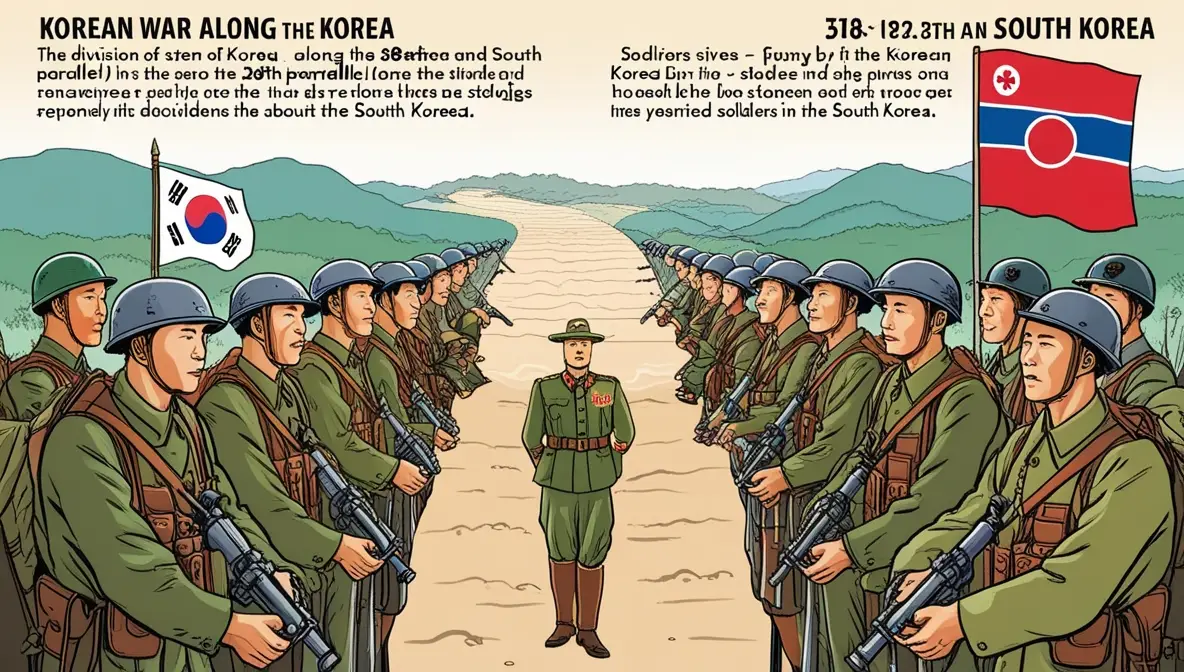
Following the end of World War II, Korea, previously under Japanese control, was divided between the United States and the Soviet Union. In 1945, the peninsula was split at the 38th parallel, with the U.S. occupying the south and the Soviets taking the north.
This division led to the formation of two distinct states. South Korea was governed by anti-communist Syngman Rhee, backed by the U.S., while North Korea was led by communist dictator Kim Il Sung, supported by the Soviets. Both leaders aimed to reunify the peninsula under their respective regimes.
On June 25, 1950, approximately 75,000 North Korean soldiers crossed the 38th parallel into South Korea, raising alarms in the U.S. about a potential global spread of communism. American officials recognized the necessity of military intervention, framing the conflict as a battle between good and evil in the Cold War context.
Initially, the U.S. military adopted a defensive strategy, focused on repelling the North Korean forces. However, the North Korean army, being well-armed and trained, advanced rapidly. In response, President Truman shifted to an offensive strategy aimed at liberating North Korea from communism.
As American forces pushed into North Korea, China grew concerned about a potential U.S. invasion of its territory. To counter this threat, China sent troops to support North Korea.
Peace Talks
President Truman sought to avoid a conflict with China, fearing it could escalate into a war involving the Soviets in Europe, leading to unnecessary casualties. Consequently, he replaced military leaders advocating for a confrontation with China.
In July 1951, with new generals in place, Truman initiated peace talks with North Korea in Panmunjom. However, negotiations stalled over the issue of war prisoners. While North Korea and China favored their release, the U.S. opposed it.
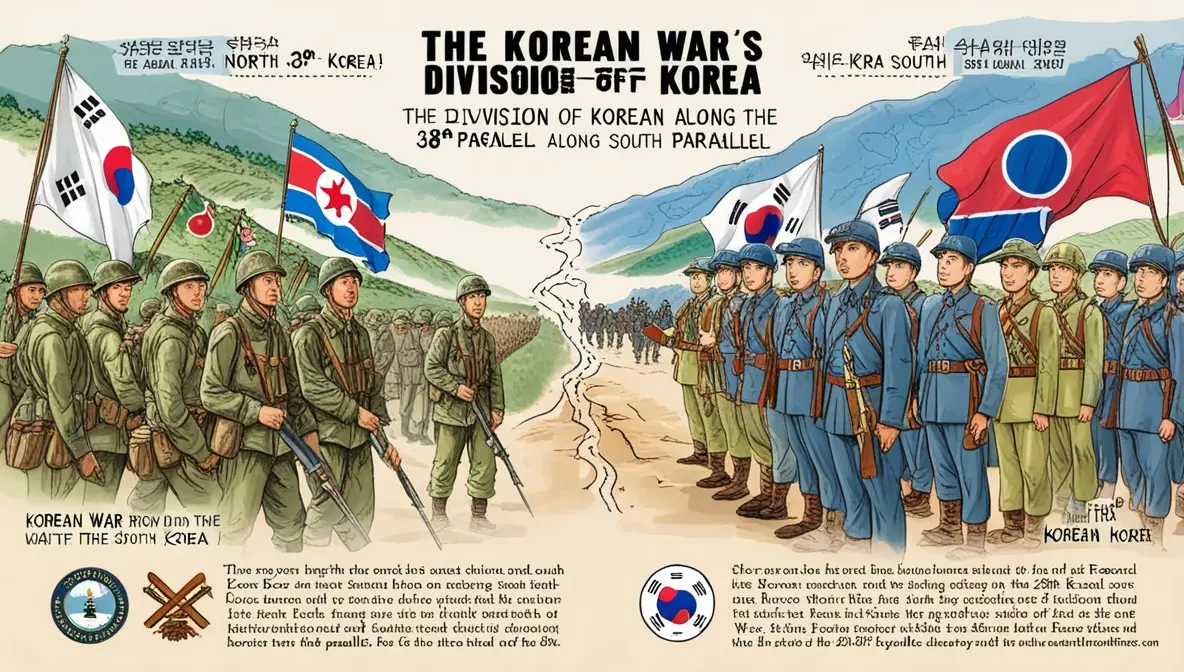
After two years of discussions, an armistice was finally signed on July 27, 1953, ending the Korean War. The agreement granted South Korea an additional 1,500 square miles of territory near the 38th parallel and established a demilitarized zone (DMZ) between the two nations.
Korean War Timeline
- 1945: Korea is divided into North and South along the 38th parallel.
- June 25, 1950: North Korean army invades South Korea, igniting the Korean War.
- June 30, 1950: The United States joins the war in support of South Korea.
- October 25, 1950: China enters the war, supporting North Korea.
- July 27, 1953: An armistice is signed, concluding the Korean War.
Aftermath of the Korean War
The conflict resulted in approximately five million deaths, including many civilians. The U.S. military suffered 40,000 casualties, with around 100,000 wounded.
To honor those who served, the Korean War Veterans Memorial was established at the National Mall in Washington, D.C.
Interesting Facts About the Korean War
- An estimated 7,800 American soldiers are still listed as missing from the Korean War, according to a 2019 report.
- About 16 countries participated in the conflict, including Great Britain, Canada, France, Australia, and Turkey.
- Surprisingly, 21 captured American soldiers chose to remain in China after the war.
- Renowned artist Pablo Picasso created the painting “Massacre in Korea” in 1951, depicting the atrocities committed in Sinchon, North Korea.
By understanding the complexities of the Korean War, we gain valuable insights into the historical tensions that continue to shape the Korean Peninsula today.
Upcoming Holidays And Celebrations:
| Date | Type | Name |
|---|---|---|
| 29 October 2026 | Event | World Stroke Day |
| 29 October 2026 | National day | National Cat Day |
| 30 October 2026 | Event | Nevada Day 2026 |
| 31 October 2026 | Event | Halloween |
| 31 October 2026 | Event | Samhain |
| 01 November 2026 | Event | All Saints' Day |
| 01 November 2026 | Event | Day of the Dead |
| 01 November 2026 | Event | Daylight Saving Time Ends 2026 |
| 01 November 2026 | Event | Movember |
| 01 November 2026 | Event | Native American Heritage Day |
| 01 November 2026 | Event | Native American Heritage Month |
| 01 November 2026 | Event | New York City Marathon 2026 |
| 01 November 2026 | Event | No Shave November |
| 01 November 2026 | Event | World Vegan Day |
| 01 November 2026 | National day | National Adoption Month |
| 02 November 2026 | Event | All Souls' Day |
| 03 November 2026 | Event | Melbourne Cup 2026 |
| 03 November 2026 | National day | National Sandwich Day |
| 04 November 2026 | Event | Iran Hostage Crisis |
| 04 November 2026 | National day | National Candy Day |
Frequently Asked Questions
When did the Korean War begin?
The Korean War began on June 25, 1950, when North Korean forces crossed the 38th parallel and invaded South Korea. This event marked the start of a conflict that quickly involved the United Nations, the United States, China, and several allied nations.
When did the Korean War end?
Active fighting ended on July 27, 1953, with the signing of the Korean Armistice Agreement. The agreement established the Korean Demilitarized Zone (DMZ) and halted military operations, but it was not a formal peace treaty.
What are the Korean War remembrance dates for 2026 and 2027?
Calendarena recognizes the anniversary of the outbreak of the Korean War each year on June 25.
- 2026: Thursday, June 25, 2026
- 2027: Friday, June 25, 2027
Why is June 25 significant?
June 25 marks the anniversary of the beginning of the Korean War in 1950. It commemorates the day the conflict started and honors the service and sacrifice of the military personnel and civilians affected by the war.
How long did the Korean War last?
The Korean War lasted just over three years, beginning on June 25, 1950, and ending with the armistice on July 27, 1953.
Who fought in the Korean War?
The main participants were North Korea, supported primarily by China and the Soviet Union, and South Korea, supported by United Nations forces led by the United States. Soldiers from more than 20 UN member nations contributed to the defense of South Korea.
Was a peace treaty ever signed?
No. The Korean War ended with an armistice rather than a formal peace treaty. As a result, North Korea and South Korea remain technically in a state of war, although active large-scale fighting ceased in 1953.
Why is the Korean War called the “Forgotten War”?
The Korean War is often referred to as the “Forgotten War” because it has historically received less public attention than World War II and the Vietnam War, despite its significant impact on international relations and the Korean Peninsula.
What was the outcome of the Korean War?
The war ended without a decisive military victory for either side. The Korean Peninsula remained divided near the 38th parallel, with the Demilitarized Zone (DMZ) serving as the border between North Korea and South Korea. This division continues today.
How is the Korean War remembered today?
The Korean War is remembered through memorial ceremonies, educational programs, veterans’ commemorations, and national memorials. These observances honor those who served, recognize the sacrifices made during the conflict, and preserve the history of one of the most important events of the 20th century.

Chokri Hamouda runs Calendarena.com. He makes simple, printable calendar templates. His goal is to help people organize their time better. He updates the site with monthly and yearly calendars for users worldwide. Chokri focuses on making calendars that are easy to read and use. He also researches holidays and date systems to keep everything accurate.