
Women’s History Month Dates
| Date | Name | Day | Week | Days left |
|---|---|---|---|---|
| March 1, 2026 | Women's History Month 2026 | Sunday | 9 | - |
| March 1, 2027 | Women's History Month 2027 | Monday | 9 | 126 |
| March 1, 2028 | Women's History Month 2028 | Wednesday | 9 | 492 |
| March 1, 2029 | Women's History Month 2029 | Thursday | 9 | 857 |
| March 1, 2030 | Women's History Month 2030 | Friday | 9 | 1222 |
| March 1, 2031 | Women's History Month 2031 | Saturday | 9 | 1587 |
| March 1, 2032 | Women's History Month 2032 | Monday | 10 | 1953 |
| March 1, 2033 | Women's History Month 2033 | Tuesday | 9 | 2318 |
| March 1, 2034 | Women's History Month 2034 | Wednesday | 9 | 2683 |
| March 1, 2035 | Women's History Month 2035 | Thursday | 9 | 3048 |
Women’s History Month: History, Meaning, and Celebrations
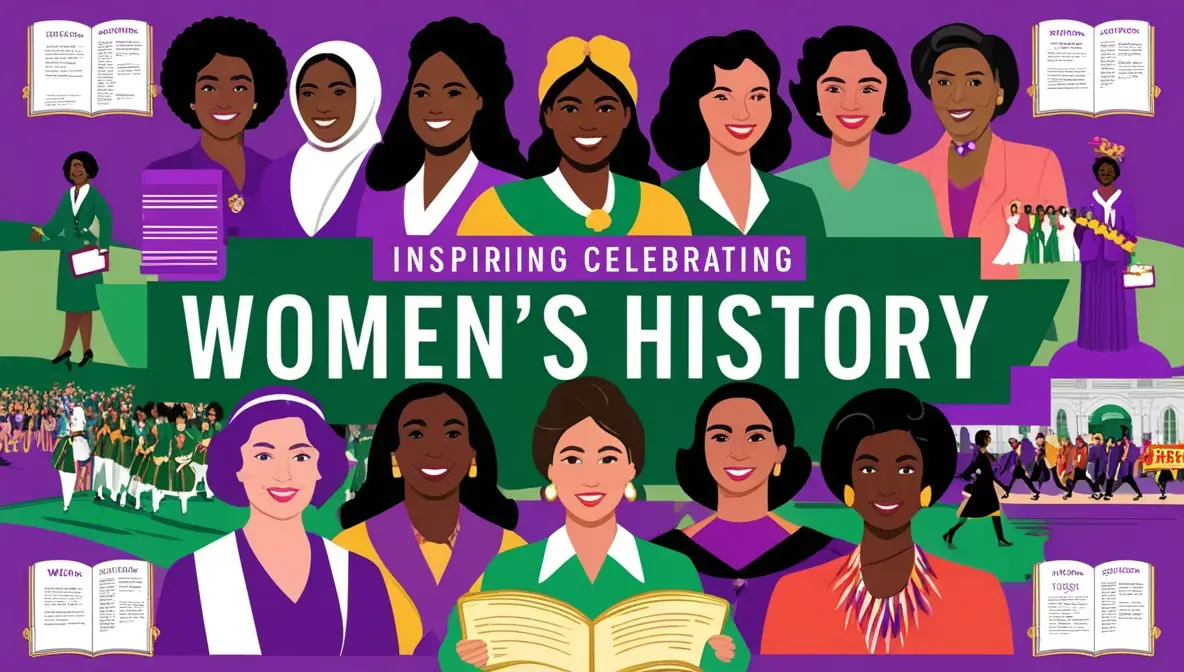
Women’s History Month is an annual celebration held throughout March, dedicated to honoring the achievements and contributions of women in culture, society, and history. Officially recognized in 1987, this month-long observance highlights the pivotal roles women have played in shaping American history and continues to inspire future generations.
Origins and History of this March celebration
The roots of Women’s History Month trace back to 1978, when Sonoma County, California, initiated Women’s History Week. This inaugural event featured a parade, essay contests, and educational presentations about influential women. The concept quickly gained traction, leading President Jimmy Carter to proclaim the week starting March 8 as National Women’s History Week in 1980. By the following year, Congress had officially endorsed this annual celebration.
In 1987, following a successful petition by the National Women’s History Project, Congress extended the recognition to the entire month of March, designating it as Women’s History Month. Each year, the President issues a proclamation honoring women’s contributions across various fields.
Why this special month Matters
This special month plays a crucial role in bringing to light the significant achievements of women who have historically been overlooked or overshadowed. It provides an opportunity to celebrate figures such as Rosa Parks, Sojourner Truth, and Susan B. Anthony, while also addressing the need to acknowledge the contributions of women of color and other often underrepresented groups. This observance not only educates the public but also seeks to inspire young girls to follow in the footsteps of these trailblazers.
Themes and Symbolism
Purple is a traditional color associated with women’s rights, symbolizing dignity and justice. This tradition began with the Women’s Social and Political Union in the UK in 1908. Since the inception of Women’s History Month, a specific theme has been chosen each year by the National Women’s History Project to focus the celebrations. Notable themes include:
- 1987: “Generations of Courage, Compassion, and Conviction”
- 1992: “A Patchwork of Many Lives”
- 2002: “Women Sustaining the American Spirit”
- 2007: “Generations of Women Moving History Forward”
- 2012: “Women’s Education – Women’s Empowerment”
- 2017: “Honoring Trailblazing Women in Labor and Business”
- 2019: “Visionary Women: Champions of Peace & Nonviolence”
- 2020: “Valiant Women of the Vote”
- 2021: “Valiant Women of the Vote: Refusing to Be Silenced”
- 2022: “Women Providing Healing, Promoting Hope”
- 2023: “Celebrating Women Who Tell Stories”
- 2024: “Women Who Advocate for Equity, Diversity, and Inclusion”
How to Celebrate This special month
To fully appreciate Women’s History Month, engage in educational activities that highlight the achievements of influential women. Attend local events and exhibitions, or participate in community discussions. Take this time to celebrate the women in your life, recognizing their contributions and expressing your appreciation.
By immersing yourself in the history and ongoing impact of women’s accomplishments, you contribute to the broader effort of honoring and continuing their legacy.
Upcoming Holidays And Celebrations:
| Date | Type | Name |
|---|---|---|
| 29 October 2026 | Event | World Stroke Day |
| 29 October 2026 | National day | National Cat Day |
| 30 October 2026 | Event | Nevada Day 2026 |
| 31 October 2026 | Event | Halloween |
| 31 October 2026 | Event | Samhain |
| 01 November 2026 | Event | All Saints' Day |
| 01 November 2026 | Event | Day of the Dead |
| 01 November 2026 | Event | Daylight Saving Time Ends 2026 |
| 01 November 2026 | Event | Movember |
| 01 November 2026 | Event | Native American Heritage Day |
| 01 November 2026 | Event | Native American Heritage Month |
| 01 November 2026 | Event | New York City Marathon 2026 |
| 01 November 2026 | Event | No Shave November |
| 01 November 2026 | Event | World Vegan Day |
| 01 November 2026 | National day | National Adoption Month |
| 02 November 2026 | Event | All Souls' Day |
| 03 November 2026 | Event | Melbourne Cup 2026 |
| 03 November 2026 | National day | National Sandwich Day |
| 04 November 2026 | Event | Iran Hostage Crisis |
| 04 November 2026 | National day | National Candy Day |
Frequently Asked Questions About
When is the March observance?
Women’s History Month is celebrated every year during the month of March in the United States. It is a time dedicated to recognizing and honoring the achievements, contributions, and experiences of women throughout history.
What are the dates for Women’s History Month 2027?
Women’s History Month 2027 will be observed from March 1 through March 31, 2027. During this month, people and organizations celebrate women’s accomplishments in fields such as science, education, arts, business, politics, and social progress.
What is the purpose of Women’s History Month?
The purpose of Women’s History Month is to recognize the important contributions women have made throughout history and to highlight their achievements in culture, society, science, leadership, and communities.
Why is Women’s History Month celebrated in March?
Women’s History Month is celebrated in March because it developed from Women’s History Week, which was first observed in March. The celebration expanded into a month-long observance to provide more time to recognize women’s achievements and historical contributions.
How did Women’s History Month begin?
Women’s History Month began as a local celebration of women’s history in the United States before becoming a nationally recognized observance. Over time, it grew into a month-long event dedicated to studying and celebrating women’s roles in history.
How can people celebrate Women’s History Month?
People can celebrate Women’s History Month by learning about influential women, reading books about women’s history, attending educational events, visiting museums, sharing stories of inspiring women, and supporting initiatives that promote equality and opportunity.
Is Women’s History Month celebrated only in the United States?
Women’s History Month is best known as a U.S. observance, but many countries recognize women’s achievements through similar events and celebrations. The dates and traditions may differ depending on the country.
What is the theme of Women’s History Month?
The theme of Women’s History Month changes each year and focuses on different aspects of women’s experiences, achievements, and contributions. Annual themes help organizations create educational programs and activities throughout March.

Chokri Hamouda runs Calendarena.com. He makes simple, printable calendar templates. His goal is to help people organize their time better. He updates the site with monthly and yearly calendars for users worldwide. Chokri focuses on making calendars that are easy to read and use. He also researches holidays and date systems to keep everything accurate.